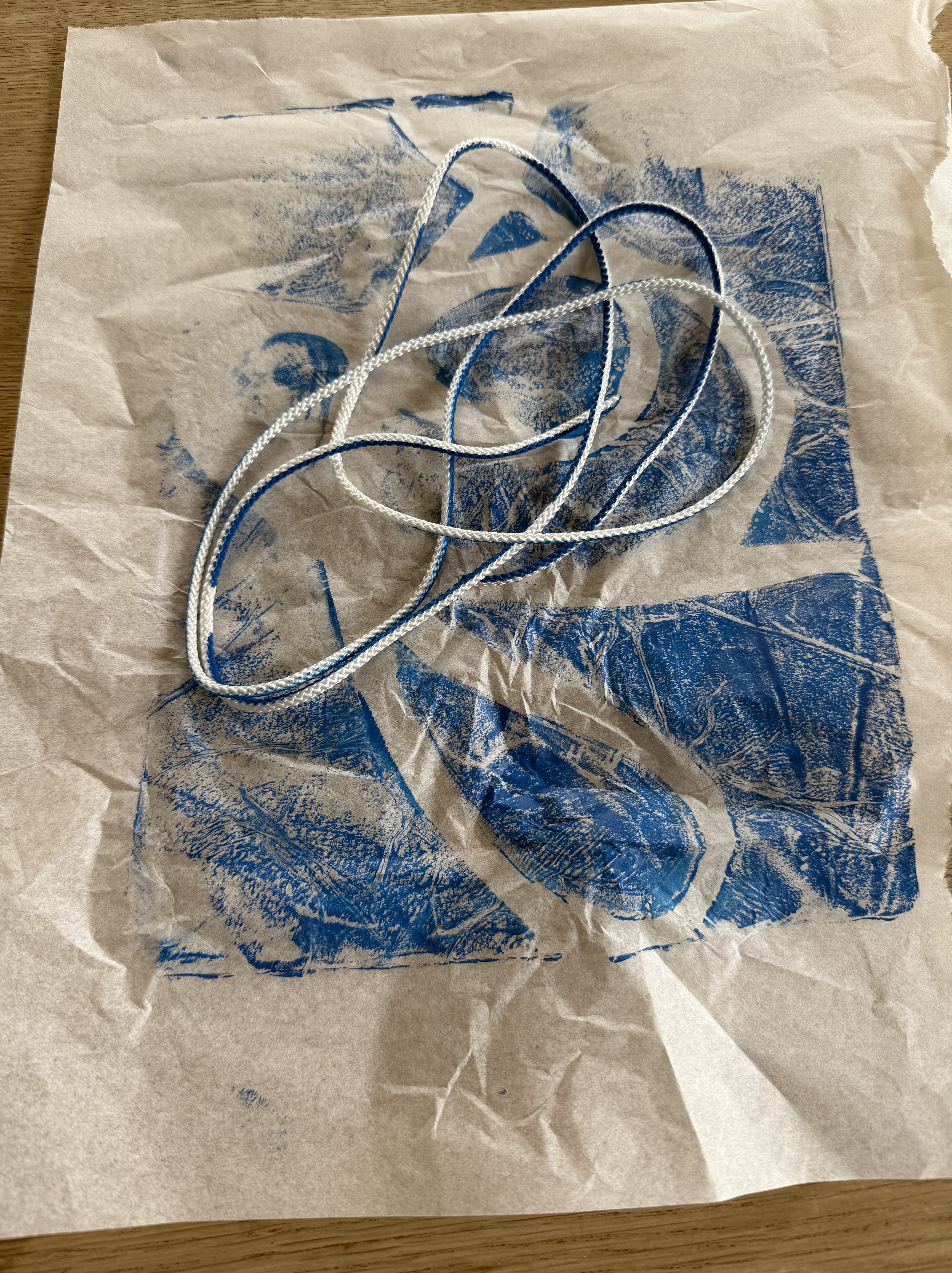
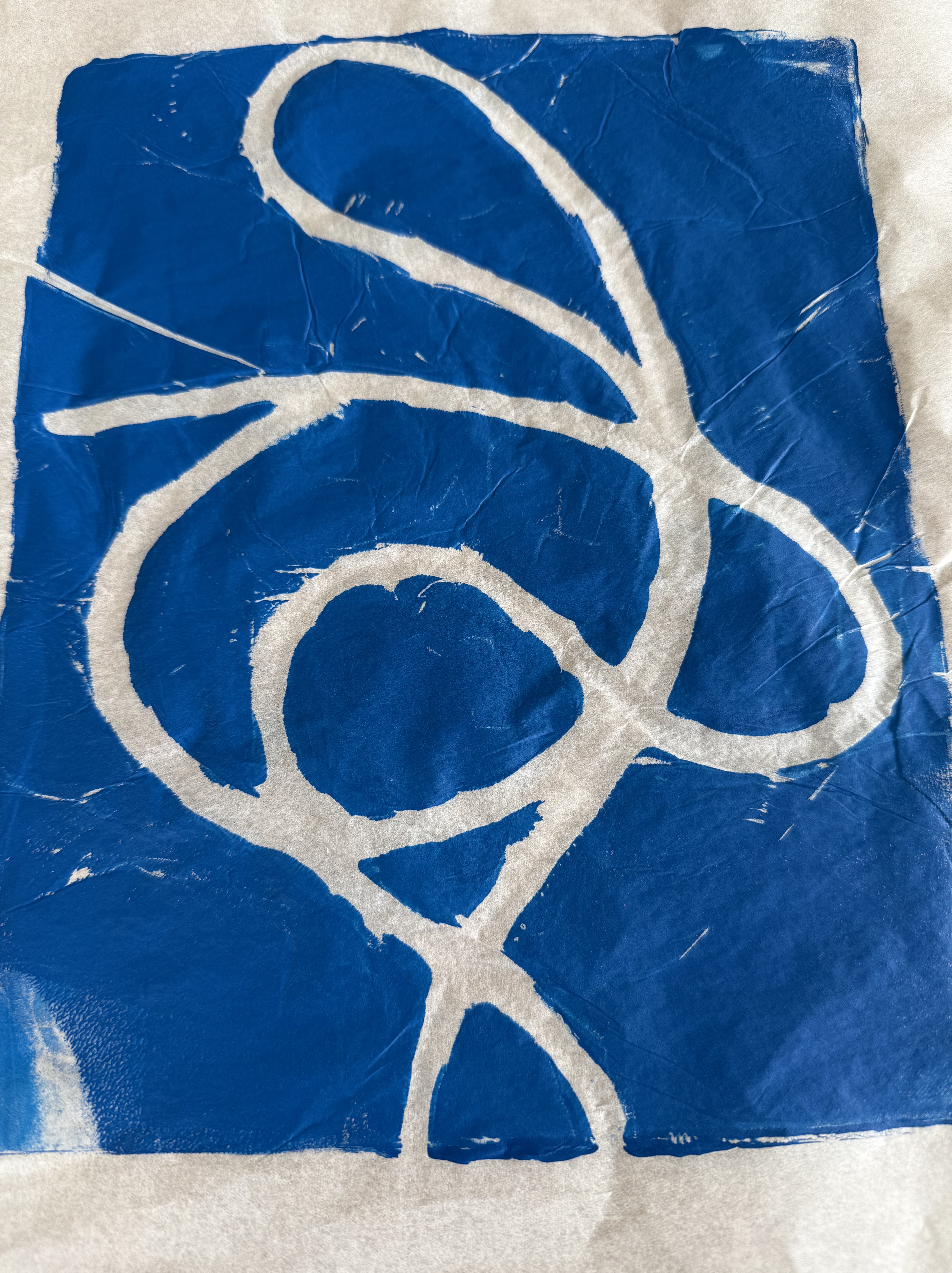
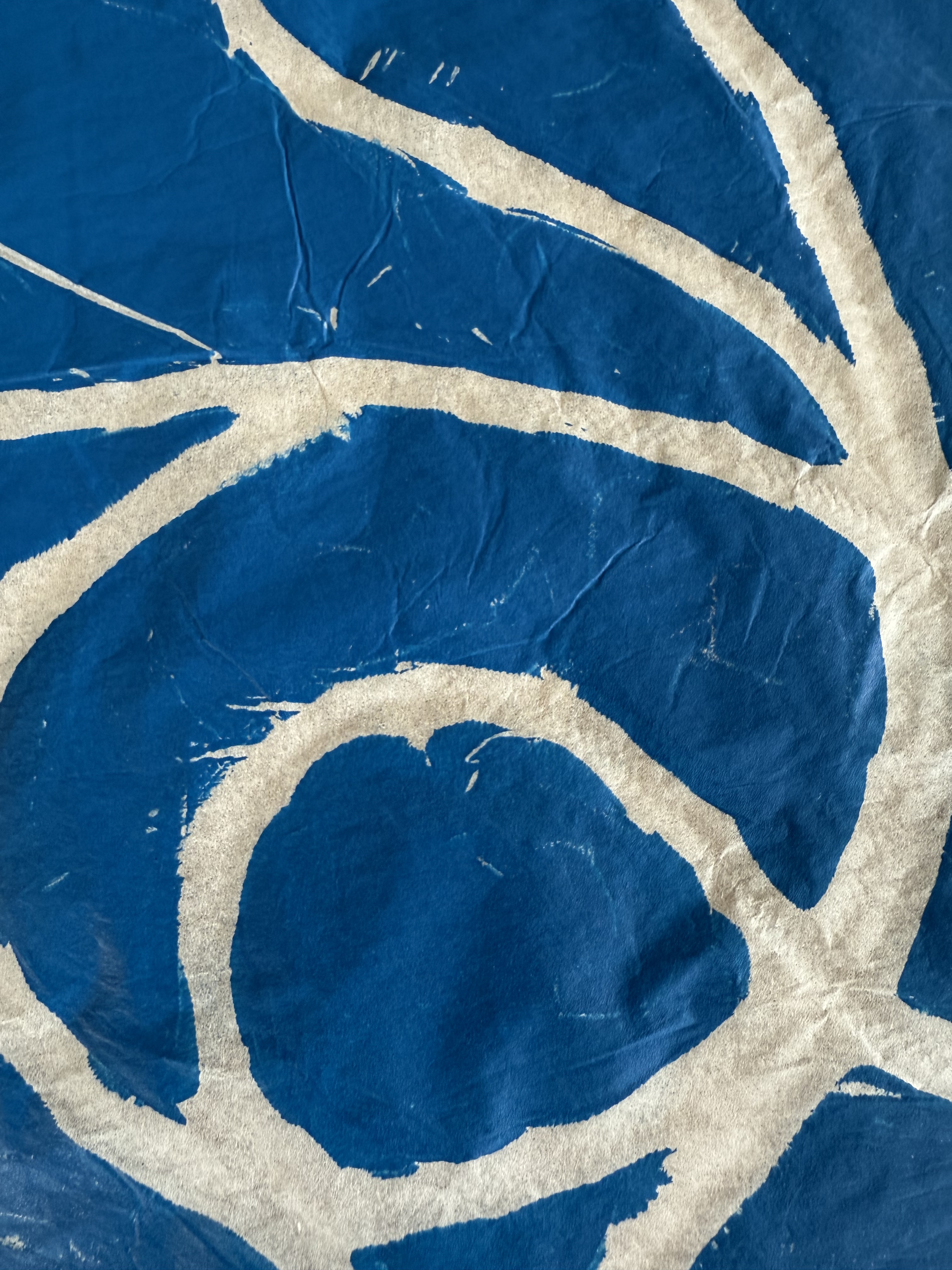
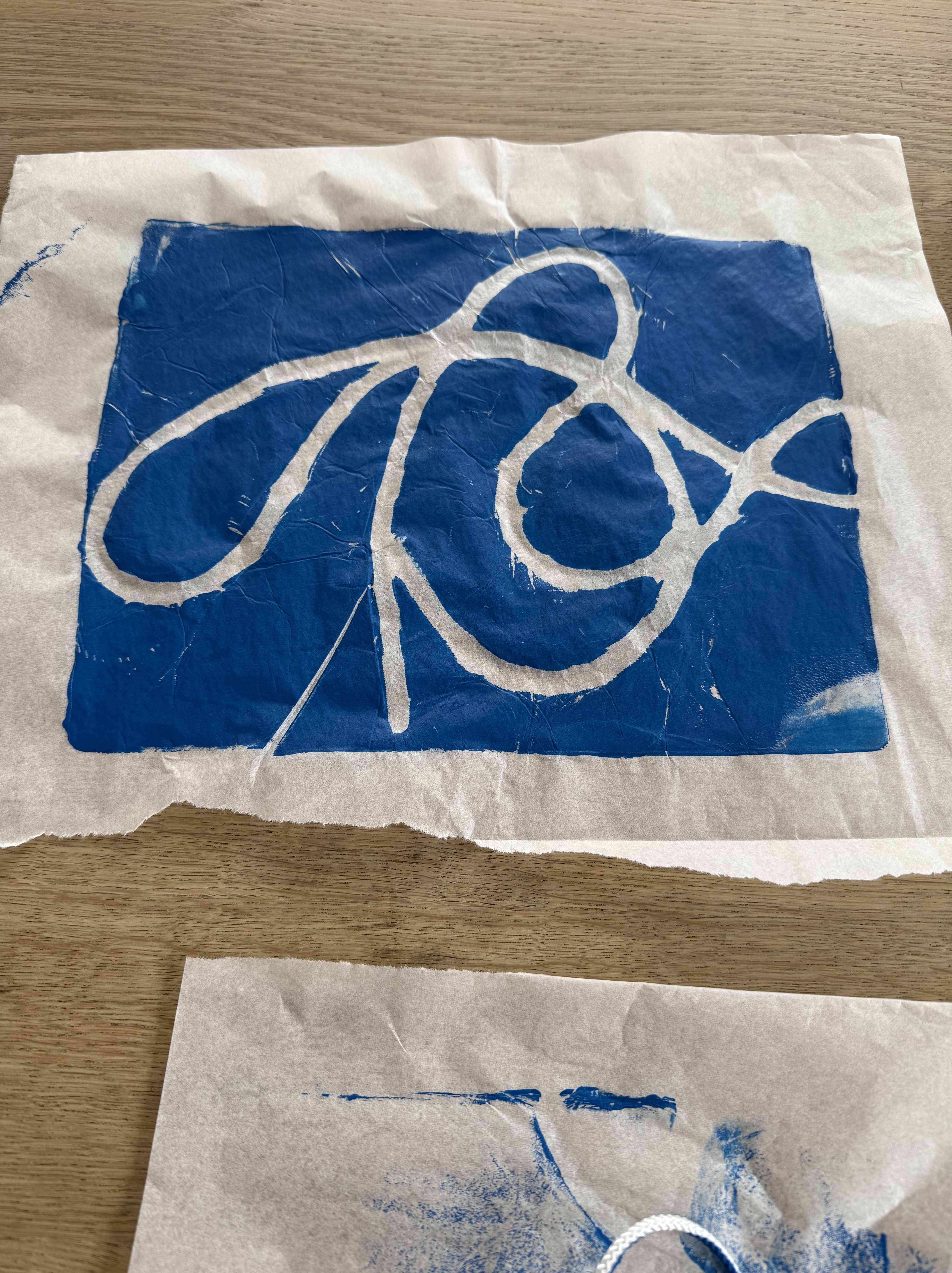
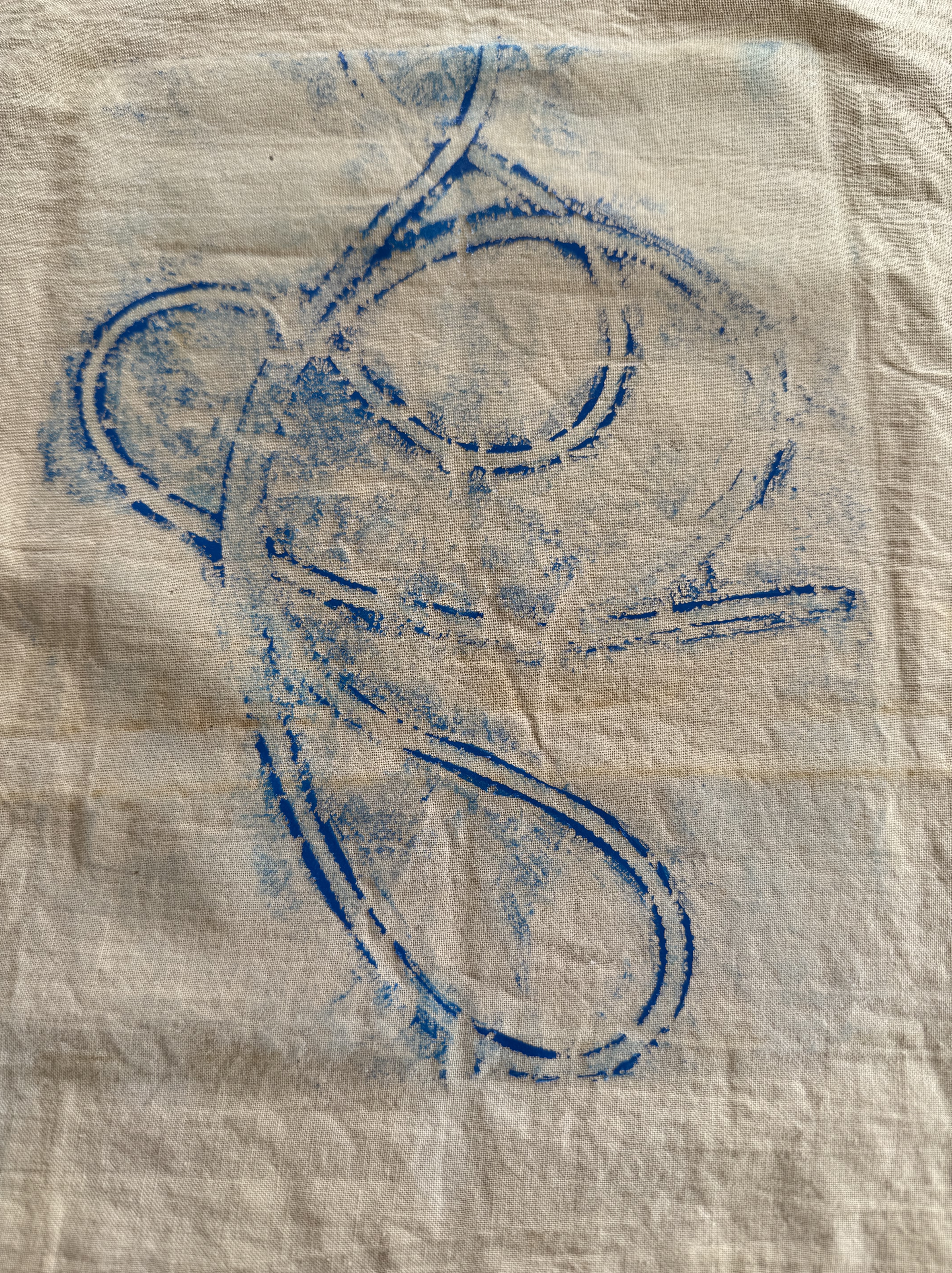
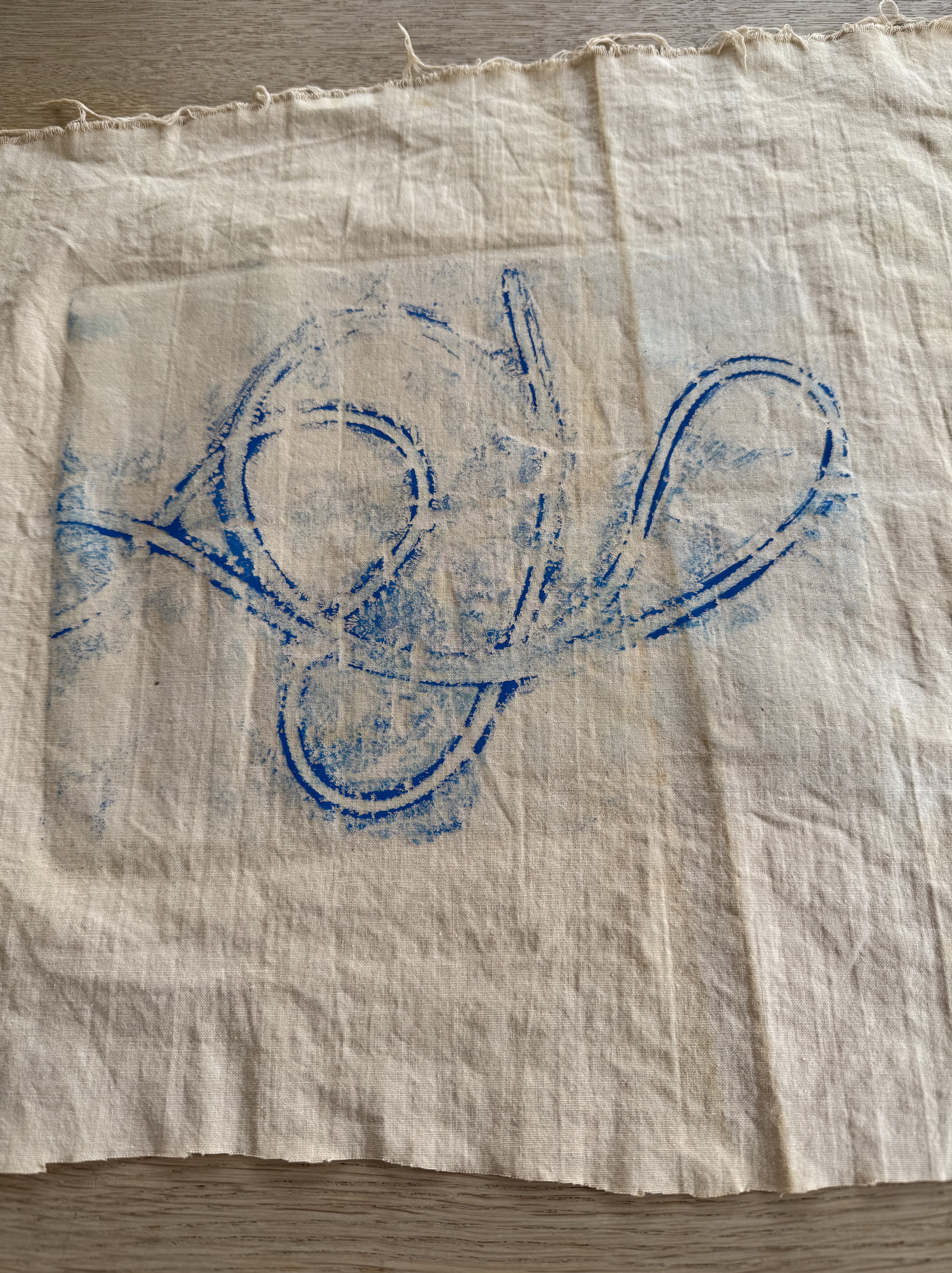
Today I just wanted to do a quick, not too messy print on a piece of cotton. So I got my Gell printing sheet out. I dyed the white cotton with teabags just to knock it back a shade and then printed a string design using a magnesium blue ( I think) acrylic.
I just wanted a pattern that I could do some embroidery on. I haven’t done any for a while and wanted to sit in front of the TV embroidering and relaxing. Which is exactly what I have been doing this afternoon. I’ve put together some threads in complimentary colours and am just straight stitching at the moment. Nice.
Embroidery version to come later but I did use Procreate to try out different colours which was extremely useful. Unfortunately my Apple Pencil won’t charge so I had to use my fat ungainly fingers to colour in the pattern so excuse the awful flat images below.
I have quite a bit of time to fill before I actually start this course so obviously I am trying to research many different textile artists, get inspiration for my work and organise what might become my work space.
I have many thousands of images in my files that can be an aid to my work and its just a matter of shifting though all of them. I suppose I’m lucky that I have been collecting inspiration for many years but I also feel that I need fresh updated imagery that speaks to me in this moment not in the past. I will be very interested to see how many “older” images I use in my work.
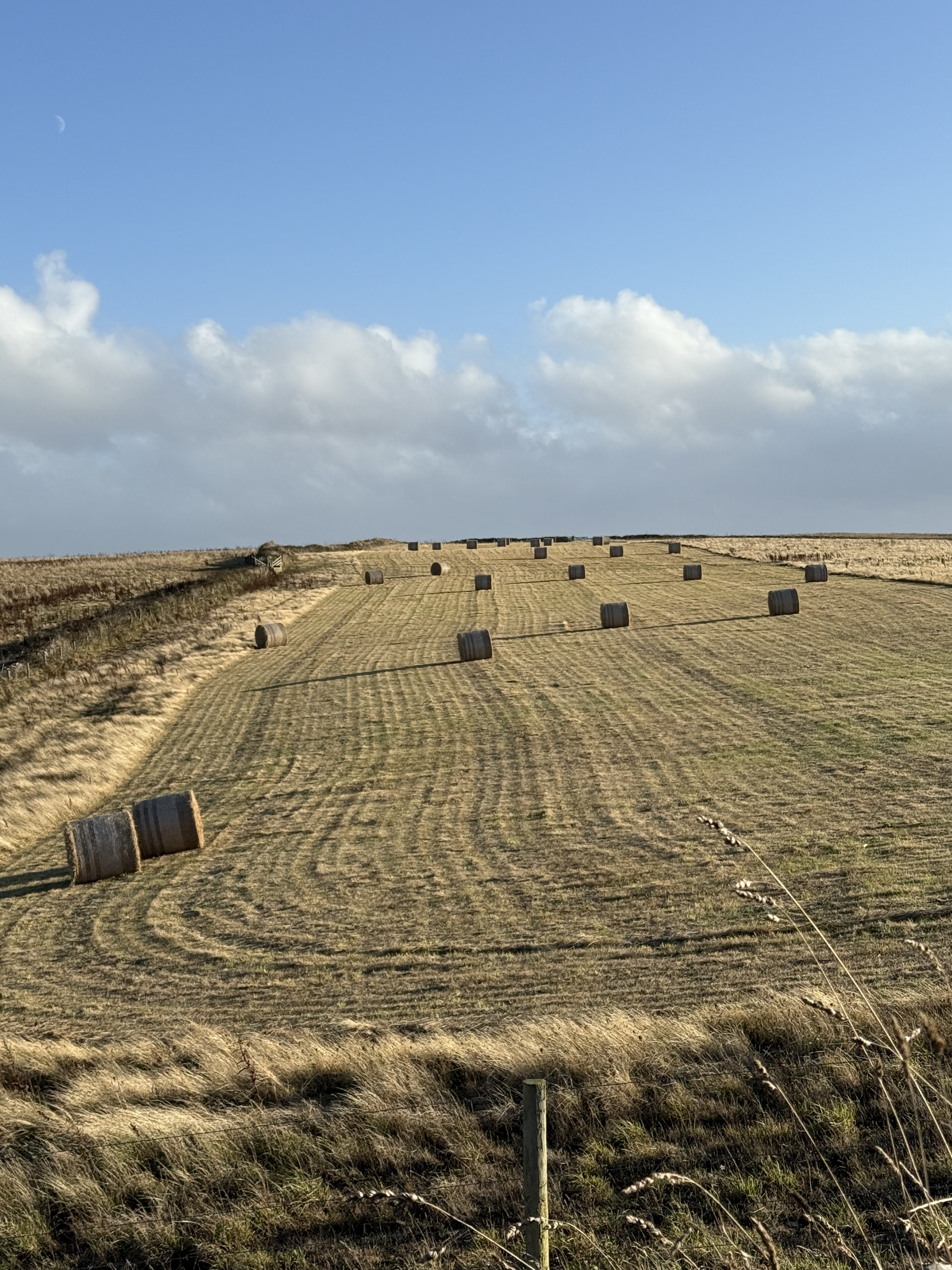
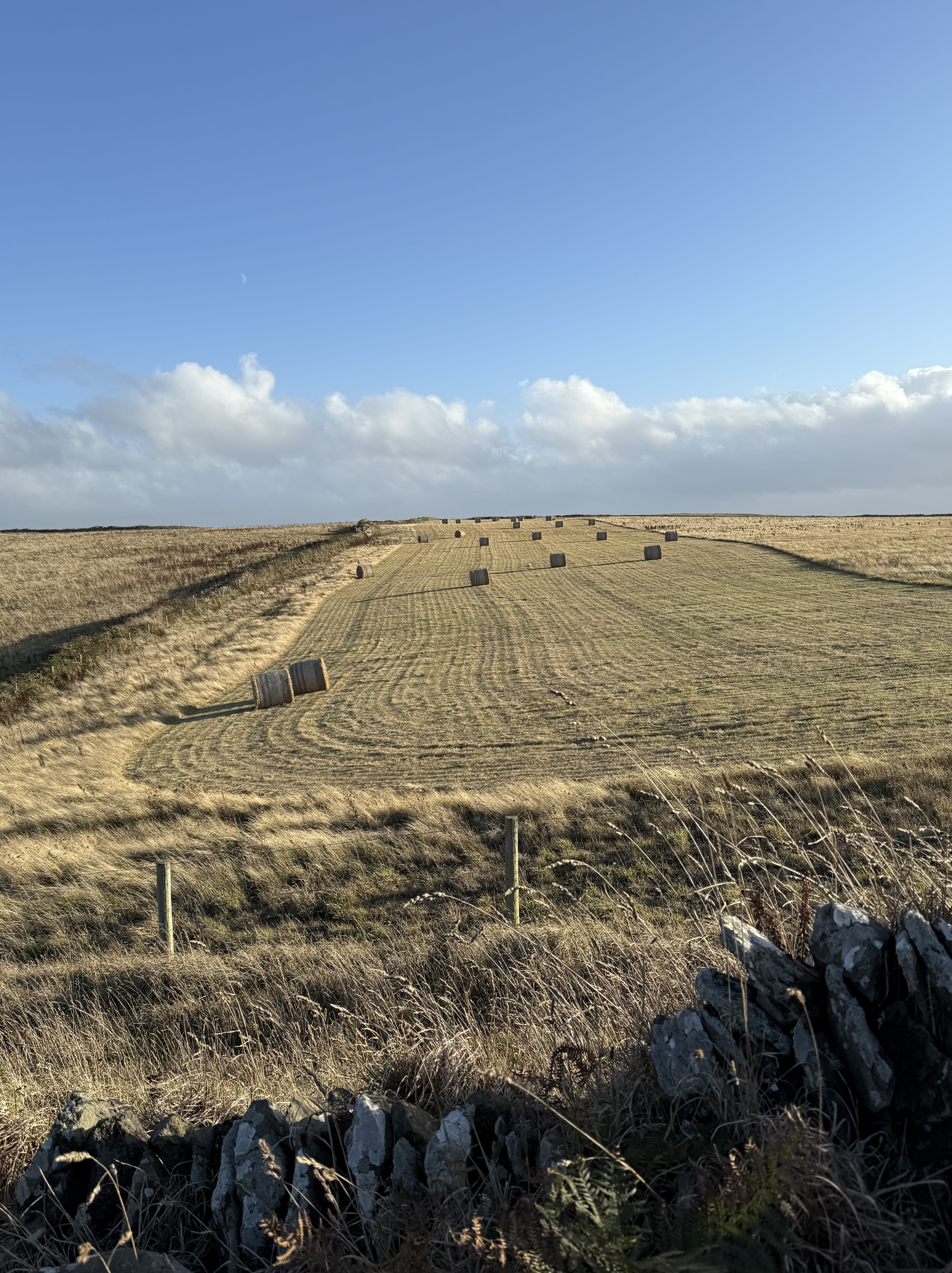
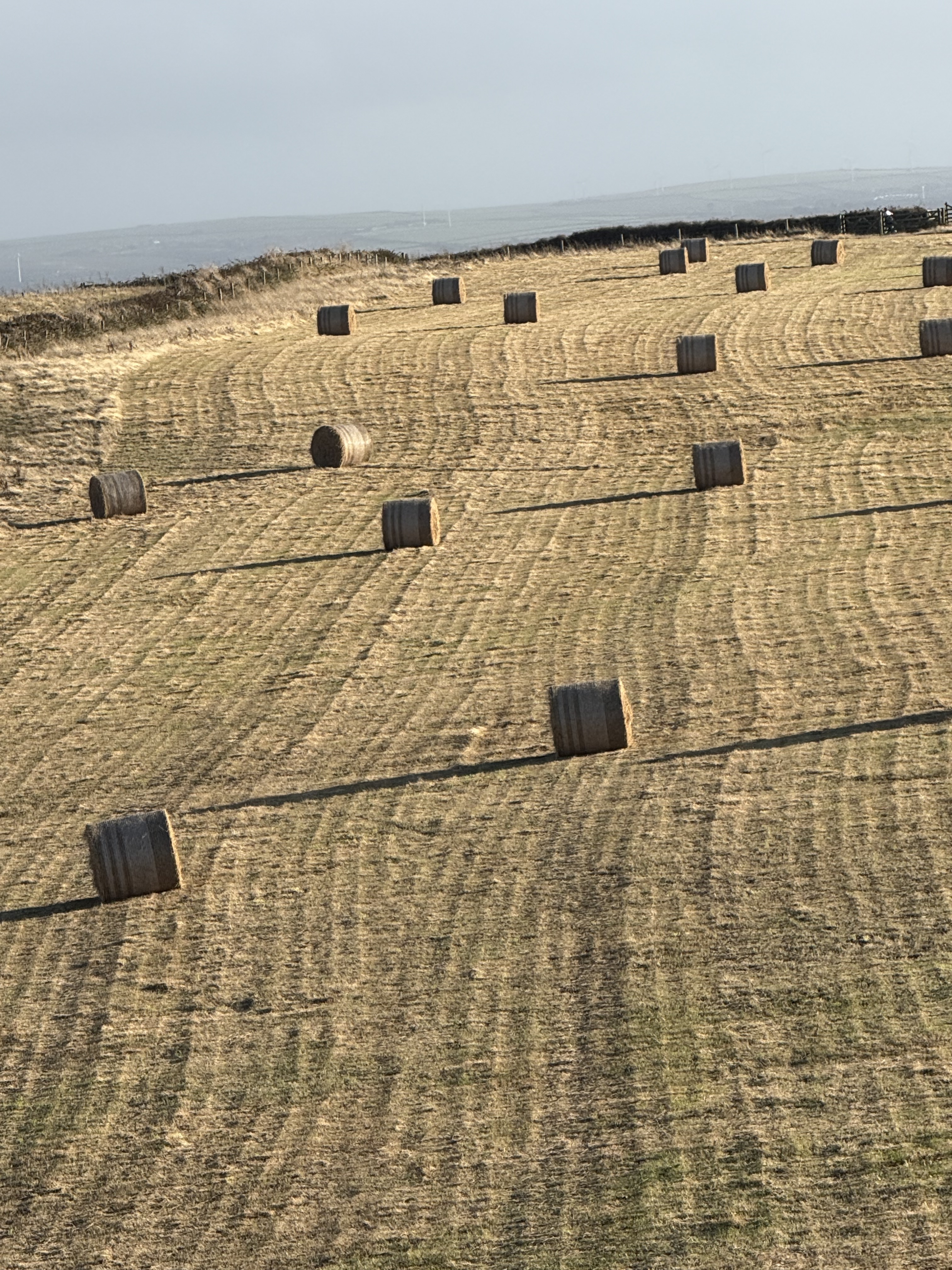
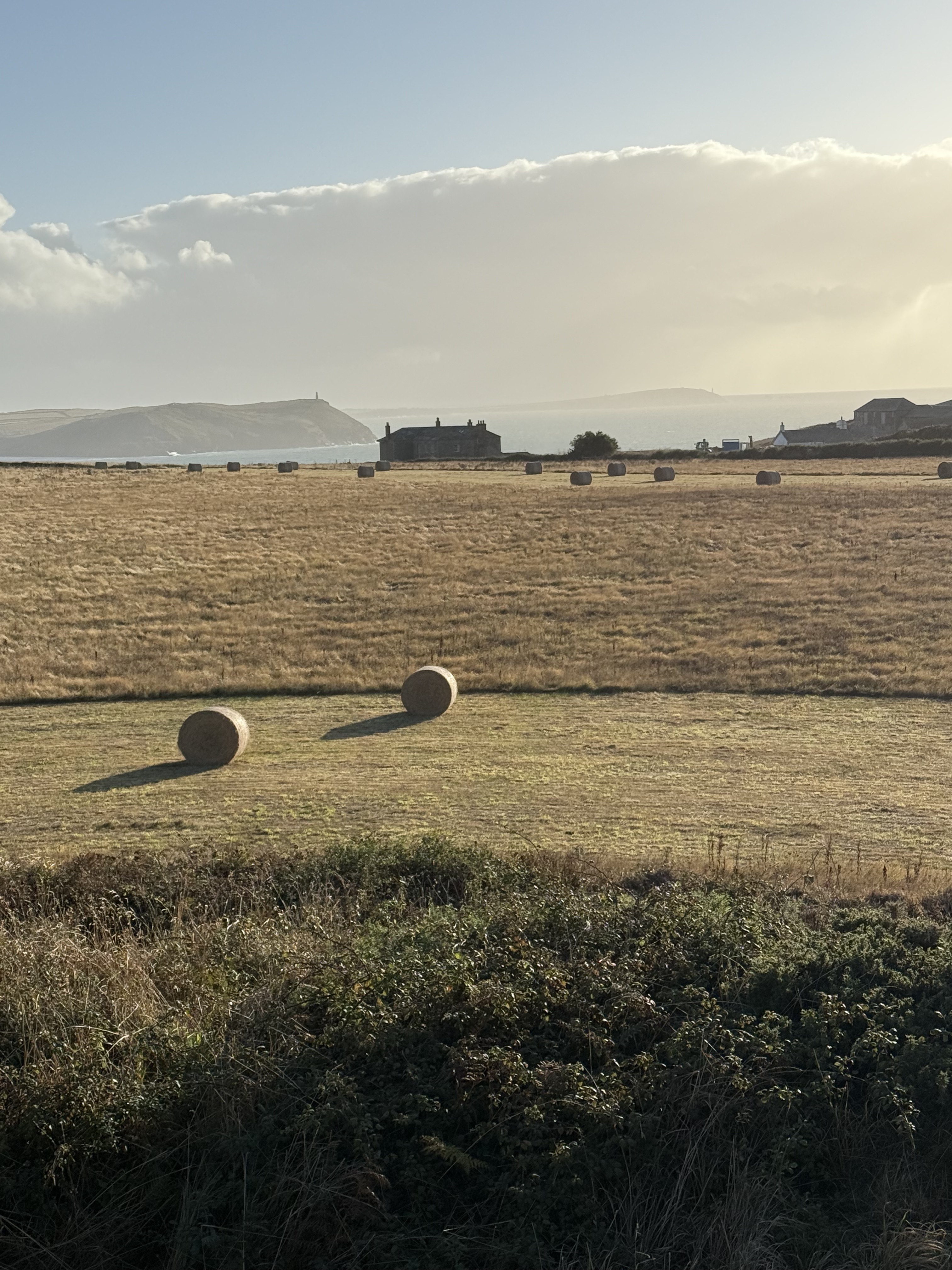
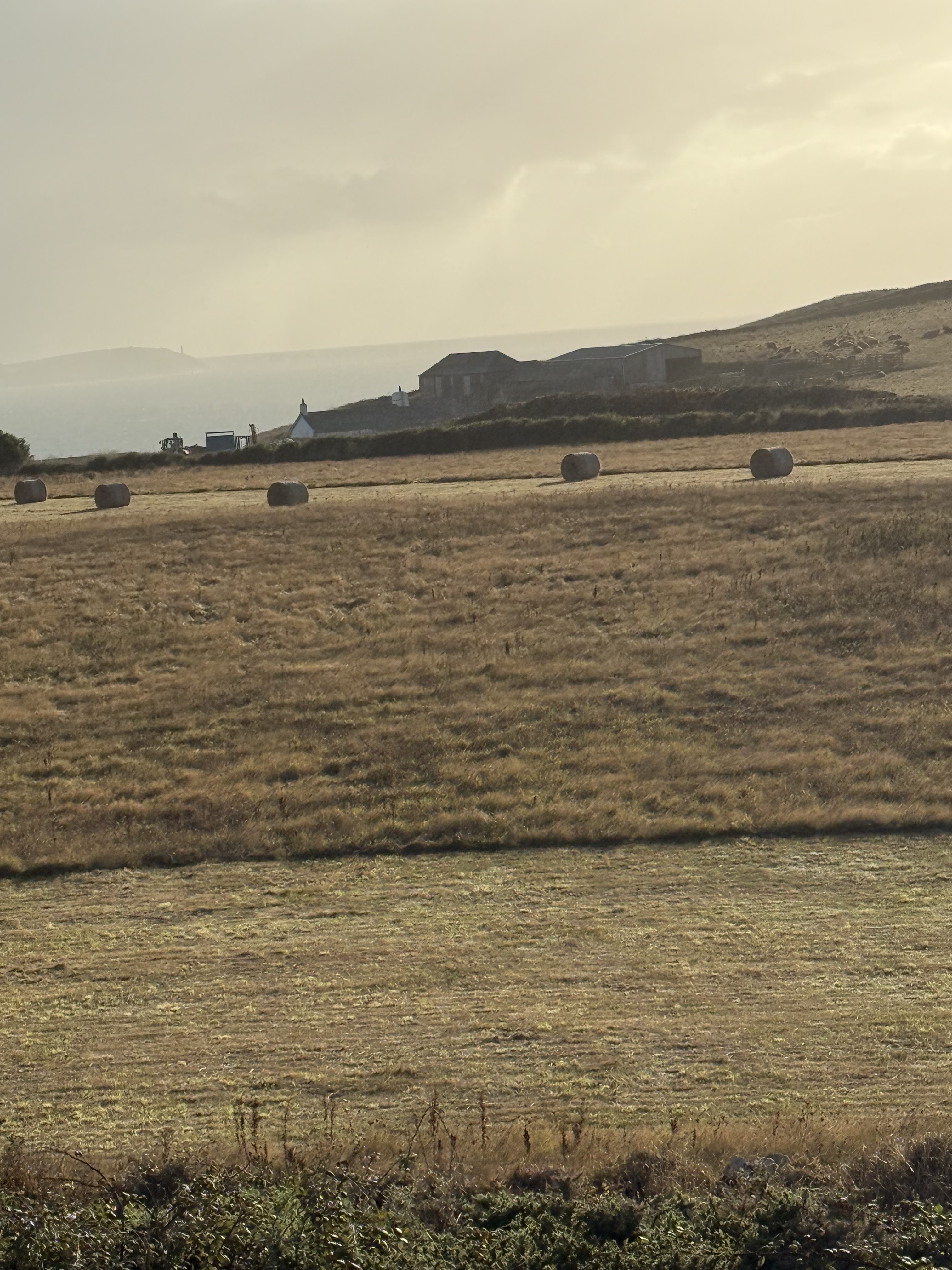
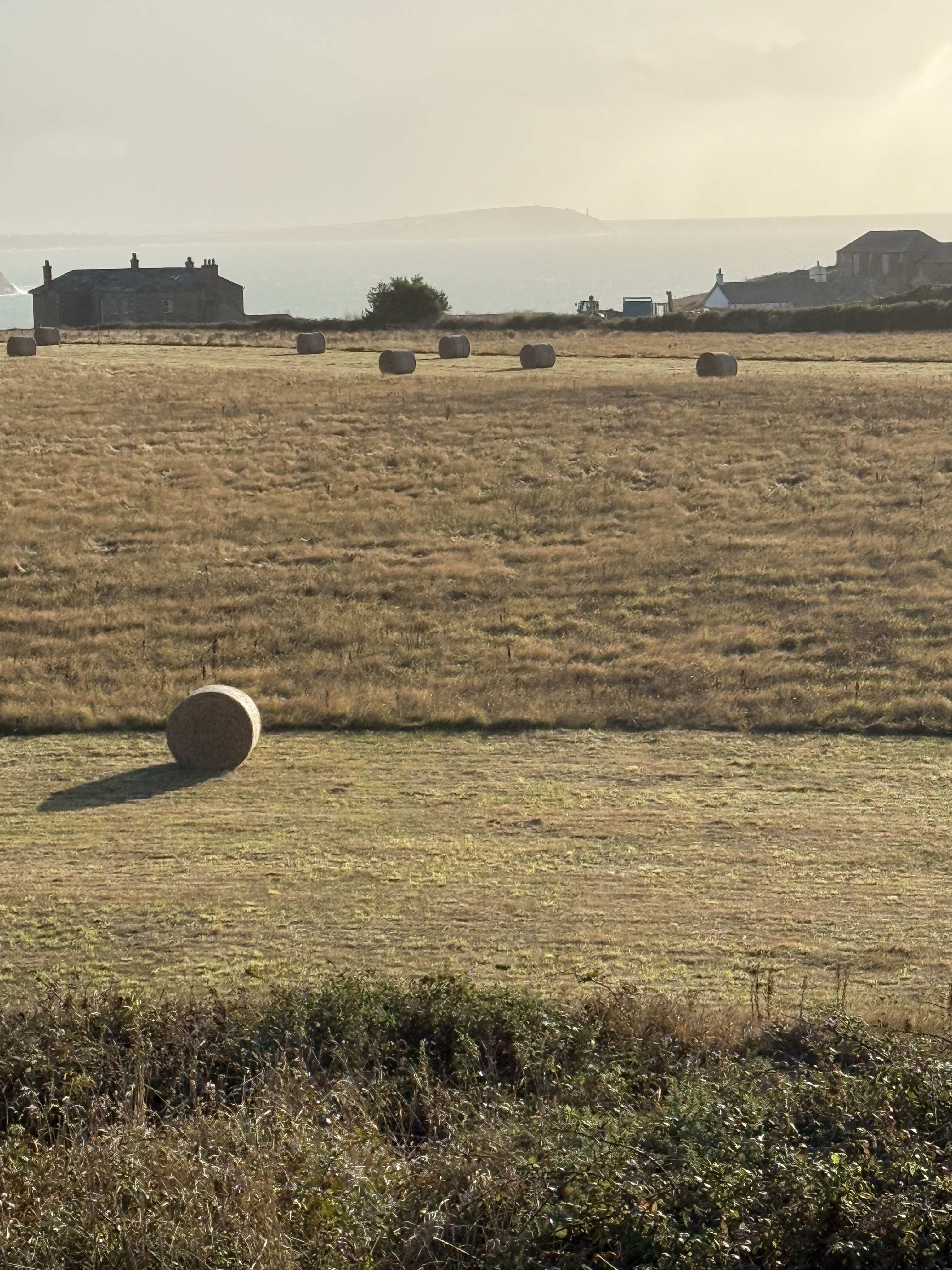
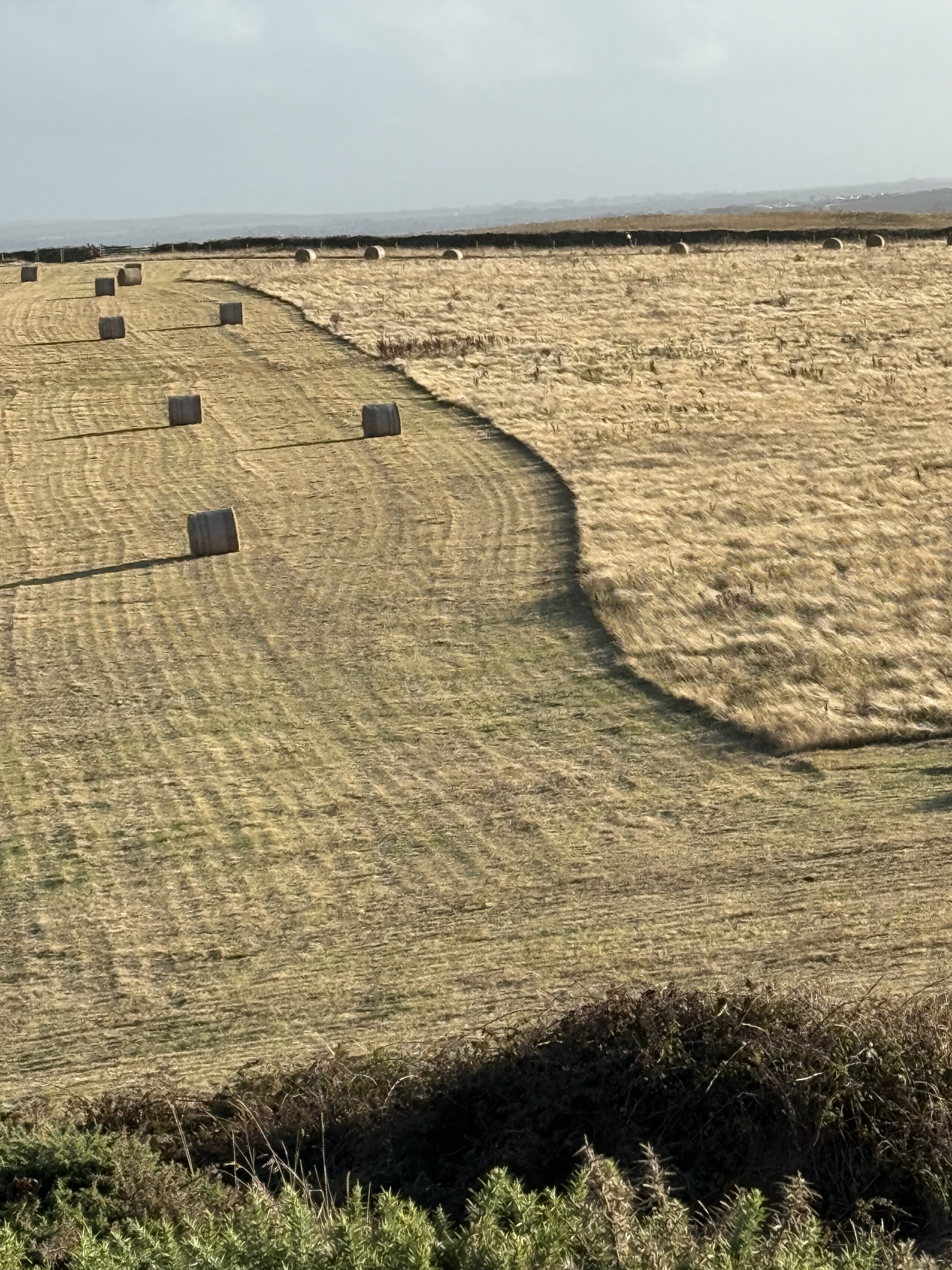
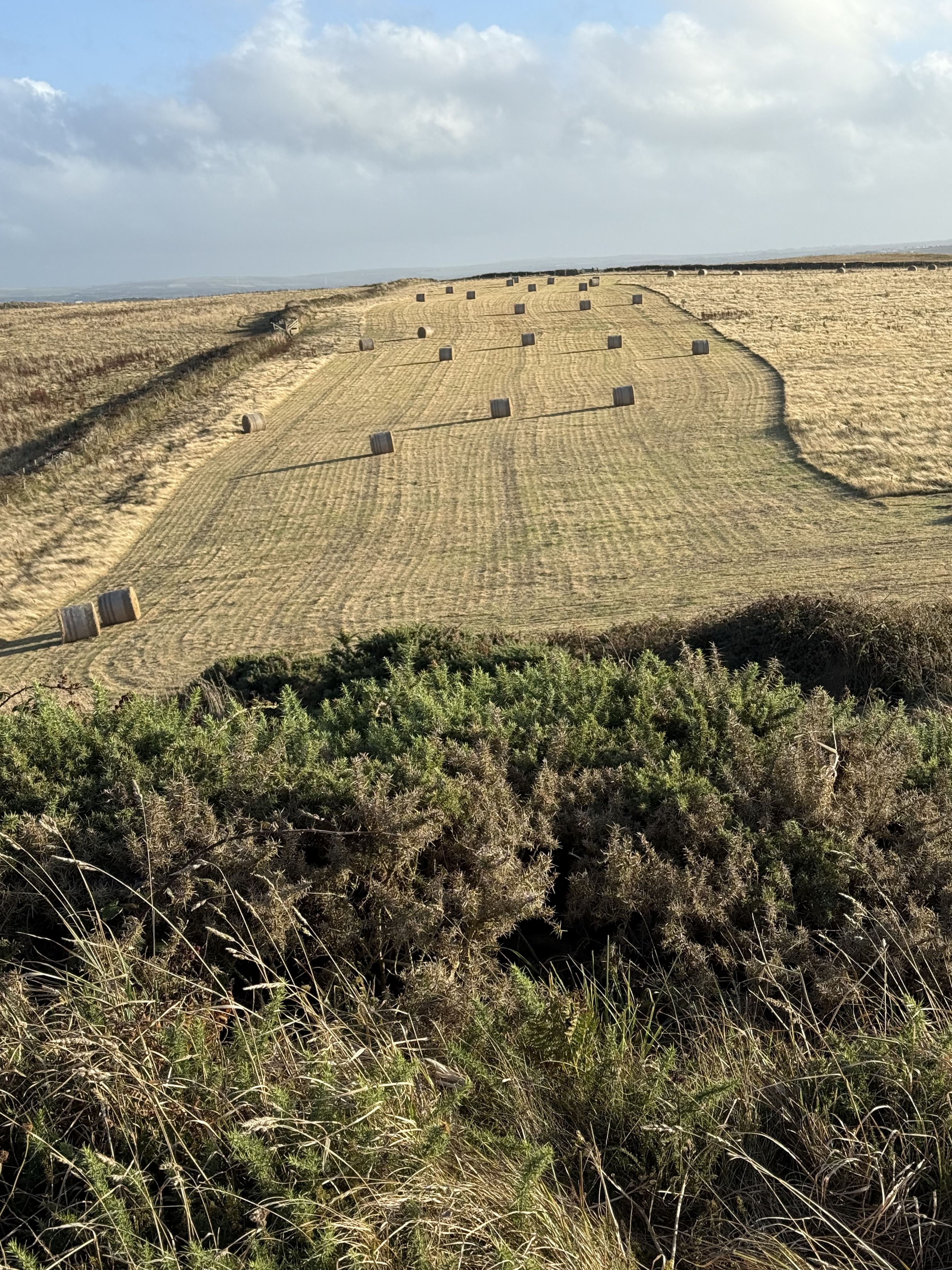
The images below were actually taken last night so are as up to date as they could be. The farmer had just gathered up his hay and had left hay bales and track marks in his field. The mixture of the surrounding long glass, the hay bales and the lines give the image a tactile quality and I can see this being an inspiration for more 3D textile work such as embroidery or even macrame. The long yellow grass can be fringe, or padded appliqué, or a fabric such as velvet. The track marks could be a painted surface with embroidery over the top and the hay bales could be anything from beads to well anything.
Great images to work from and obviously I’m glad I was in the right place at the right time because the light plays a big part of exposing the different elements of the images.
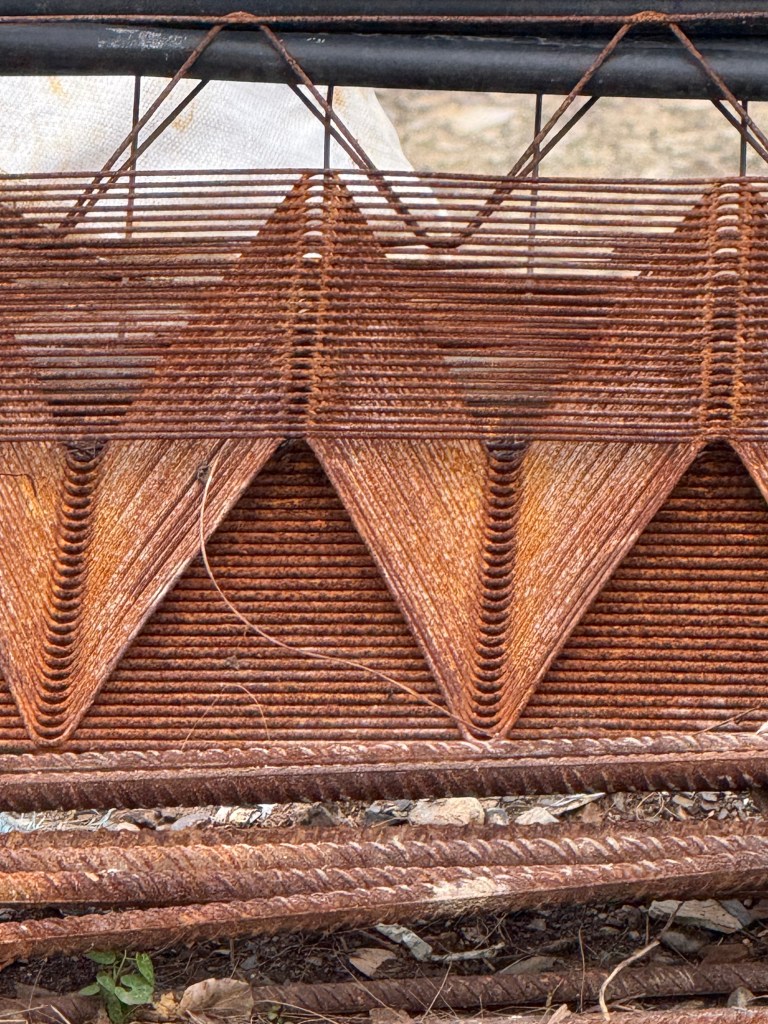
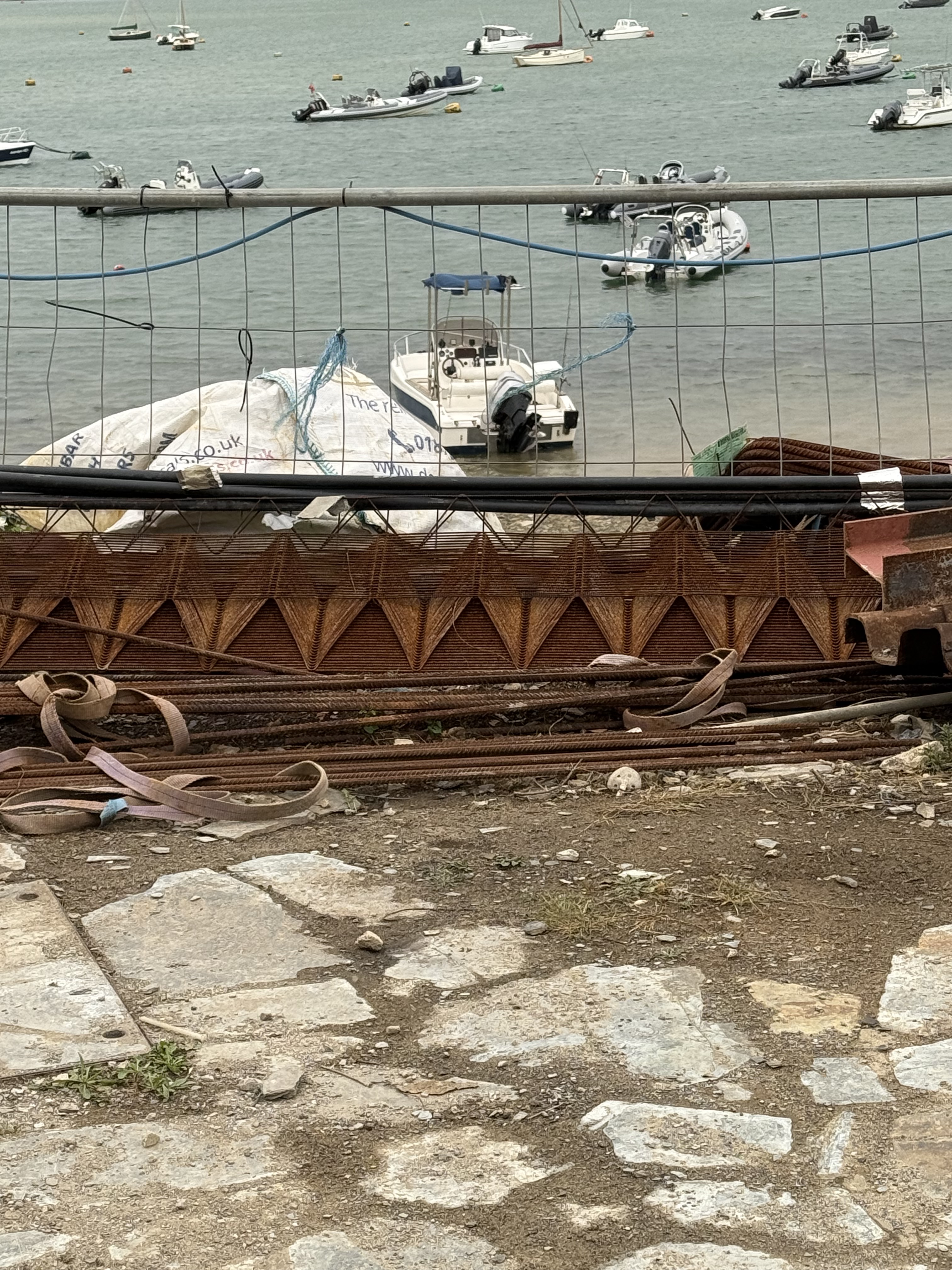
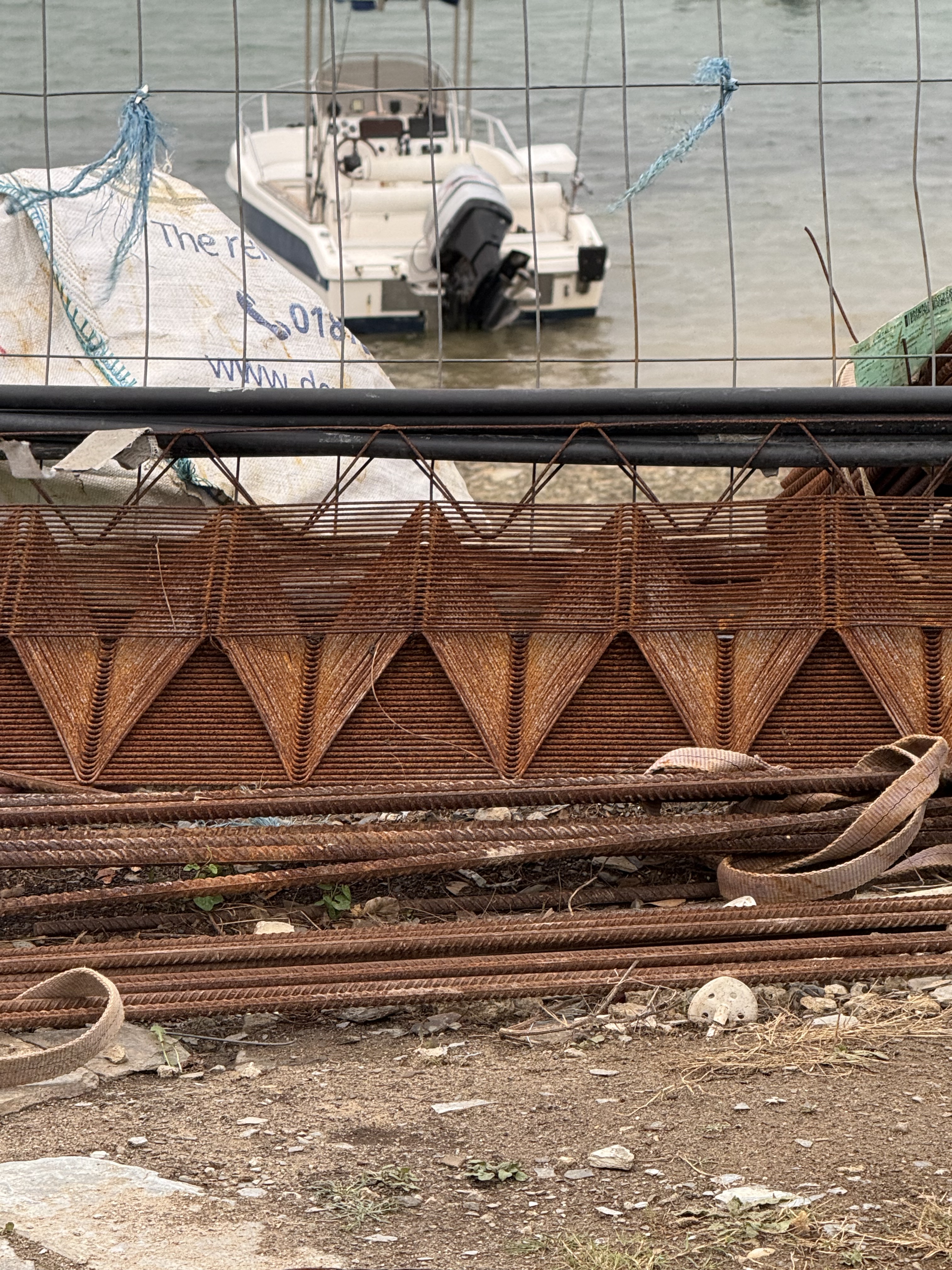
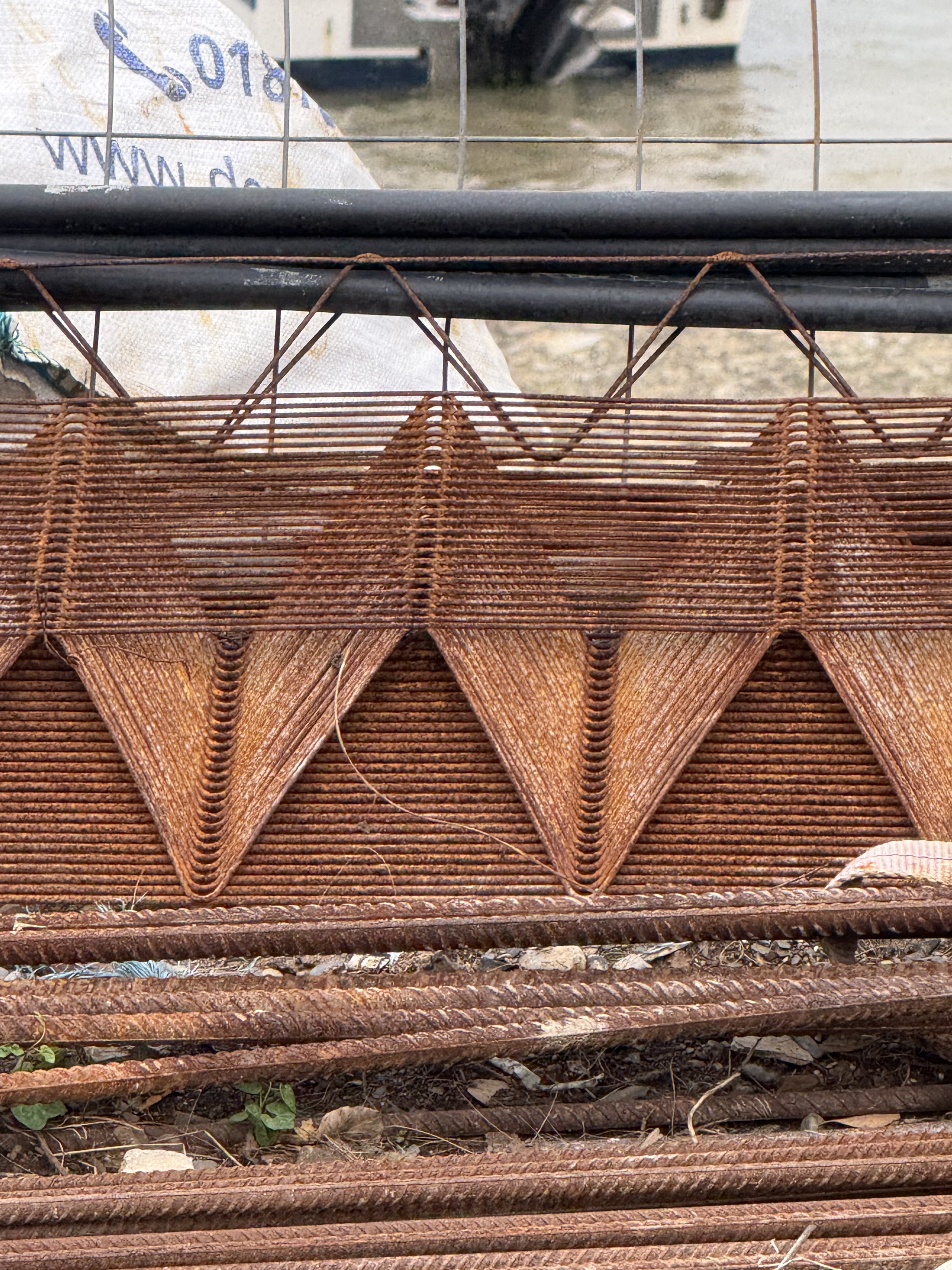
Yes Casually Placed Metal would make a great band name …. But I am trying to describe this area of inspiration and am having some difficulty explaining my thoughts. As a trained metalsmith I obviously have some infinity with all types of metal. I am particularly fond of pieces of metal that have been casually stored, for example on a building site, surplus metal laid down waiting to be used or put to one side and forgotten about. I love seeing the random patterns that these pieces of metal create ( seeing a lorry stacked with lengths of metal is extremely exciting!). I think that I am interested in the exciting geometric patterns that are randomly generated by someone who has no idea what art form they have accidentally created.
For example this stack of rusted metal that I spotted this evening in Rock Cornwall. I wonder what this metal is actually used for? I wonder who put it there? Dumped with other random building objects by the sea. The pattern that the pieces of metal jumped right out at me – isn’t it interesting. The colour too is deep and warm. I can see the textile possibilities that might be created from the this beautiful discarded metal.
THE TEXTILE ARTIST – ANNEKE KLEIN
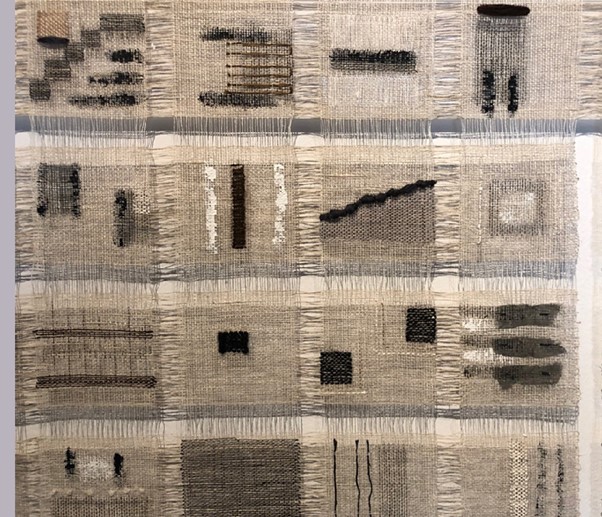
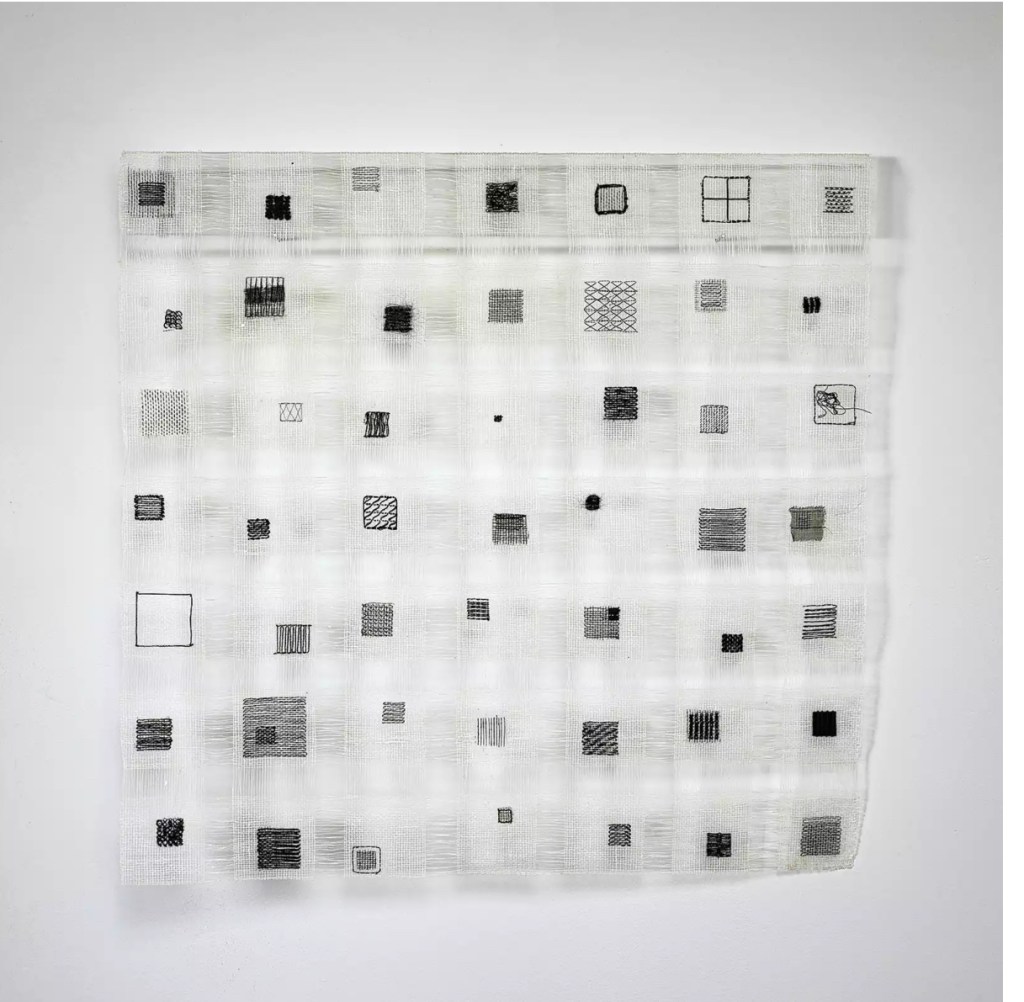
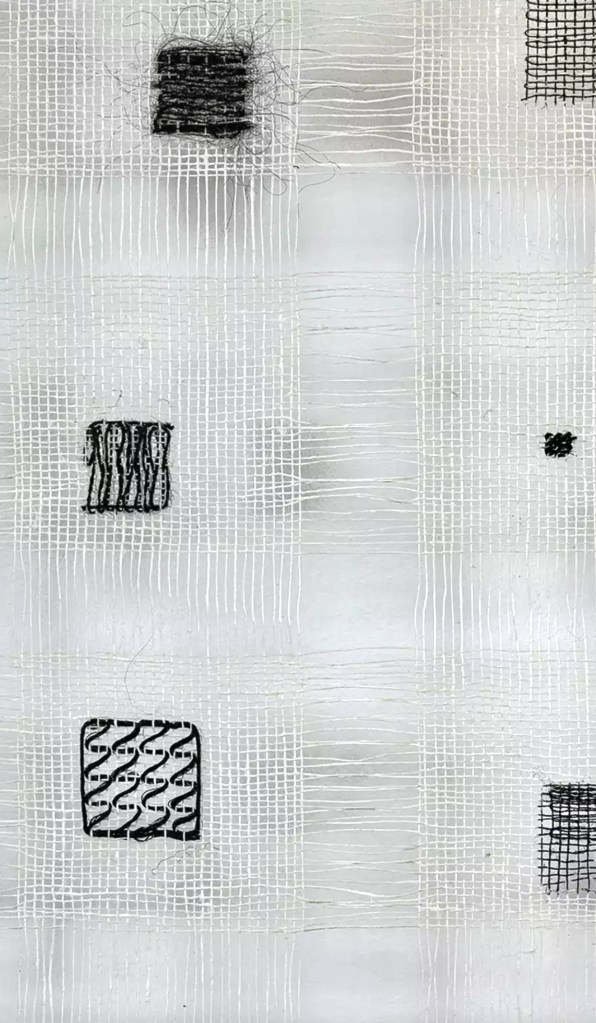
Whilst researching metal as an inspiration for textile art I came across ANNEKE KLEIN. It was very interesting to me to see that my journey to textiles and weaving directly mirrored that of Klein. I wonder how many other metalsmiths have this reaction to working with metal? I honestly thought it was only me !!!!
KLEIN says that she works in miniature due to her training as a goldsmith.
I absolutely love the grid structure of Klein’s work and the neutral colour scheme is extremely calming. Her work has a fragile aesthetic, weaving in loose white cotton with over weaves or embroidery in black and neutrals placed in a grid pattern. Thoughtful, structured work, carefully planned but whose regimentation is softened by the different embellishment that she has sewn into the grids.
Self expression through weaving came about after wrestling with cold hard materials during my education as a goldsmith. Because my heart chose the warmth, softness and comfort of yarns, I retrained quickly in weaving techniques.
Using basic weaving techniques I create a variety of shapes, textures and structures. It is an ever growing process, an investigation, a translation, as if looking through a symbolic lens at the everyday and the things that touch me emotionally. With a fascination for rhythm and repetitions.
Working with a variety of materials and colours and with a love for simplicity, shape and activity, I develop both unique wearables and spatial creations often with a combination between form and function.
With my wearables I try to bring a sensual experience by an interaction between person and material and to achieve an almost tangibility to the space in between.
My objects are an interplay between the woven structure and the unforeseen additions and/or manipulation of the material which then shows an emotional content and causes a reaction. Often fueled by a social impact with its authority and fragility.
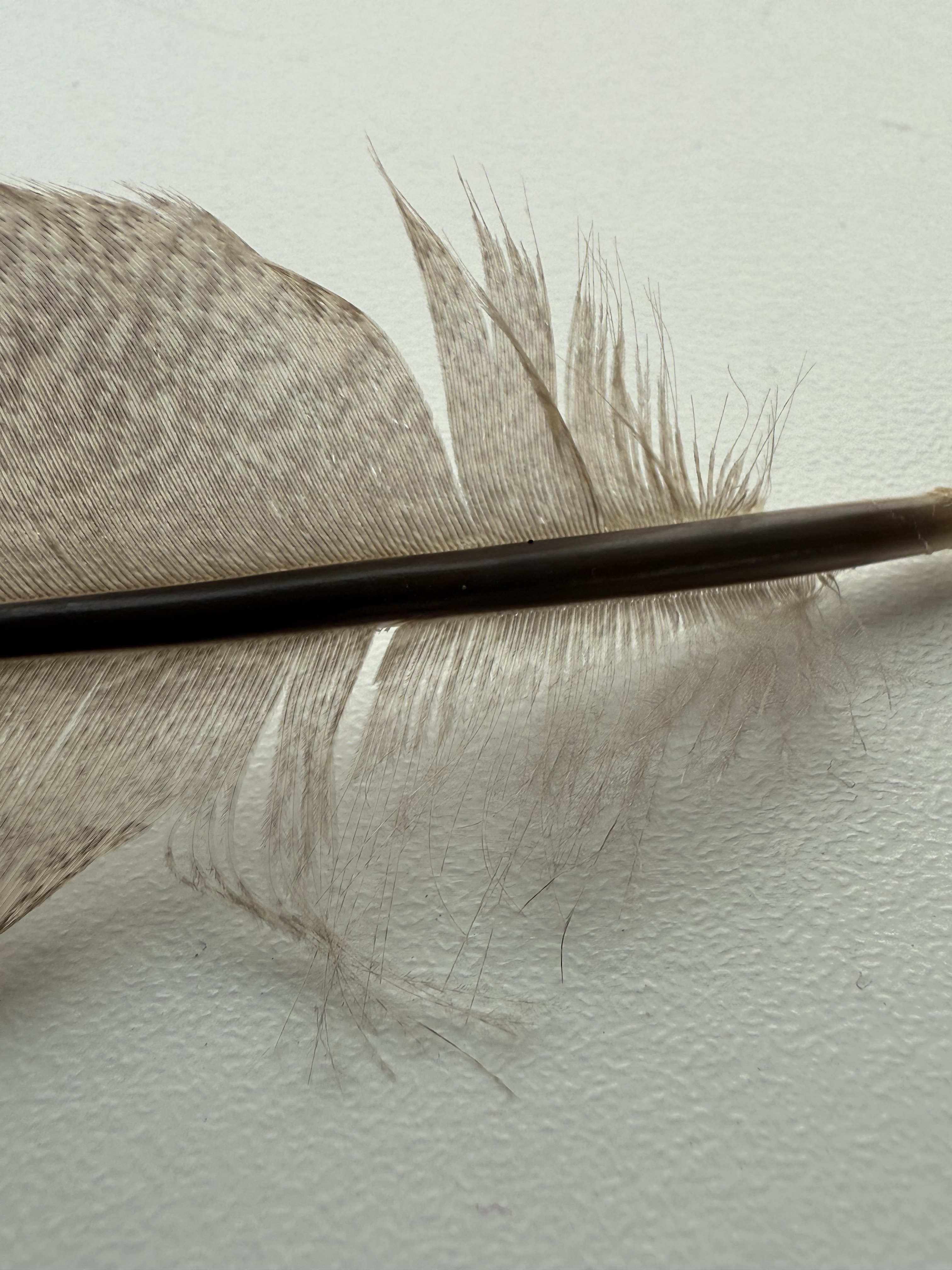
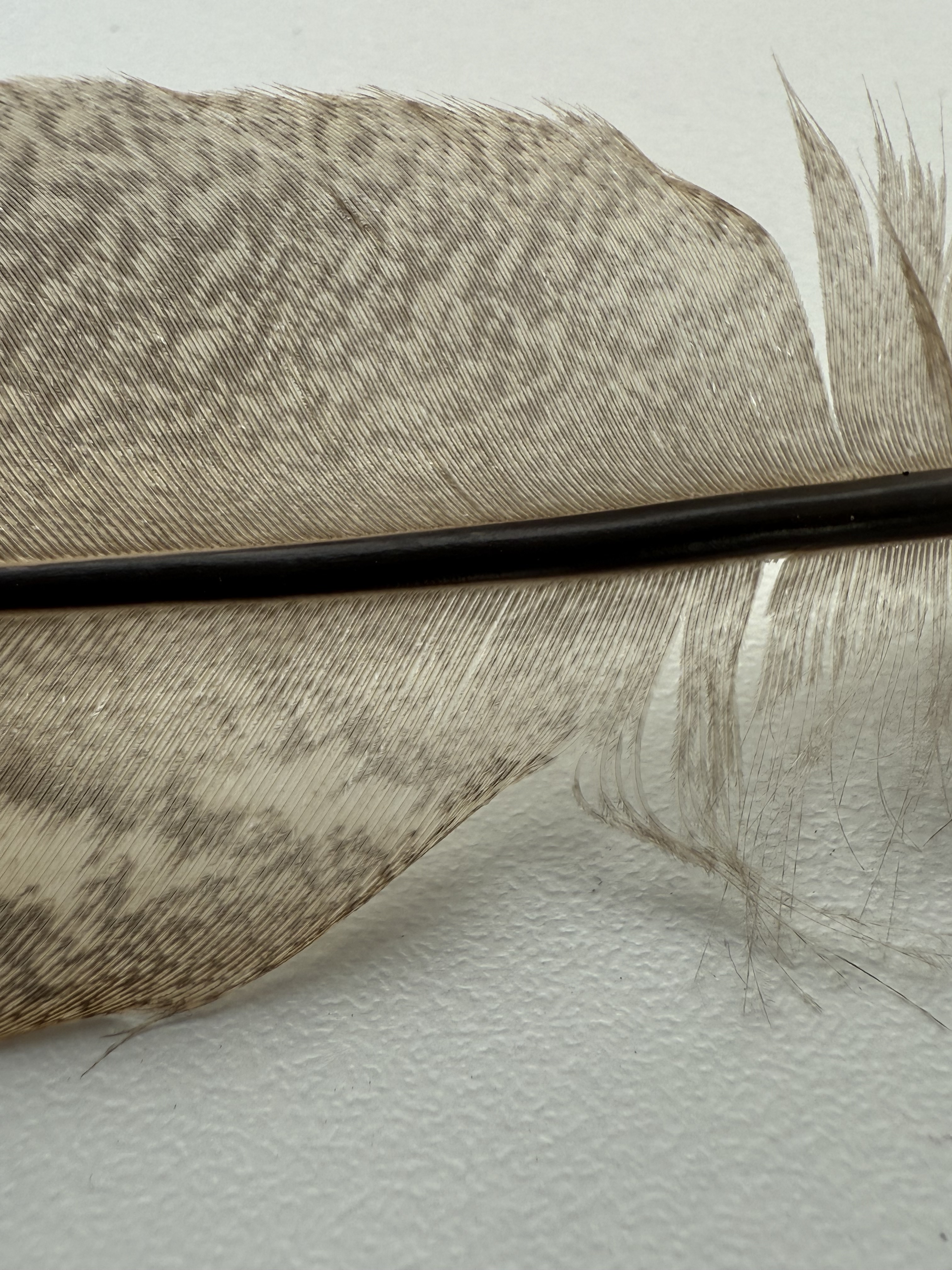
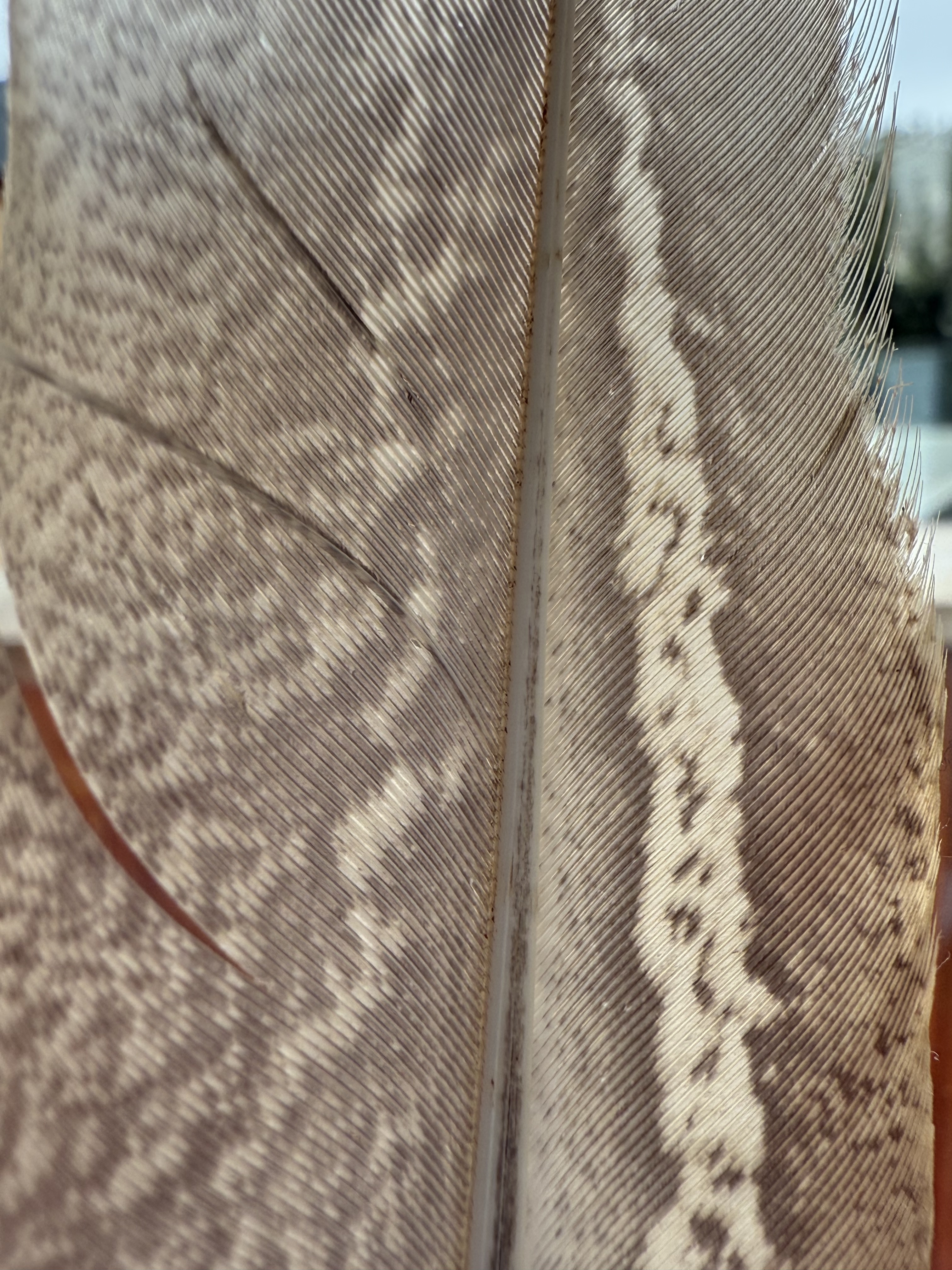
Another area that I am thinking about researching and using as inspiration for my work is feathers.
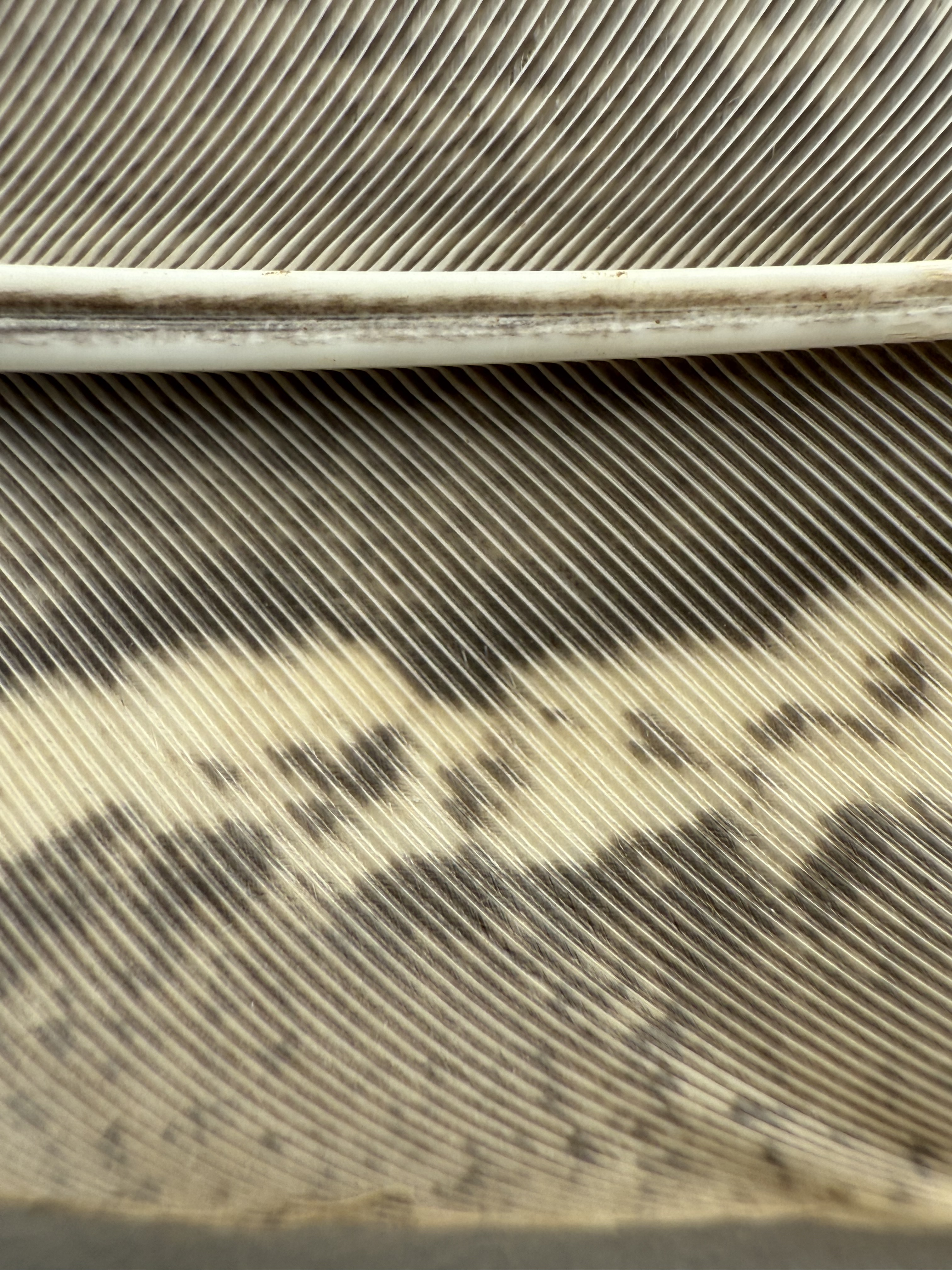
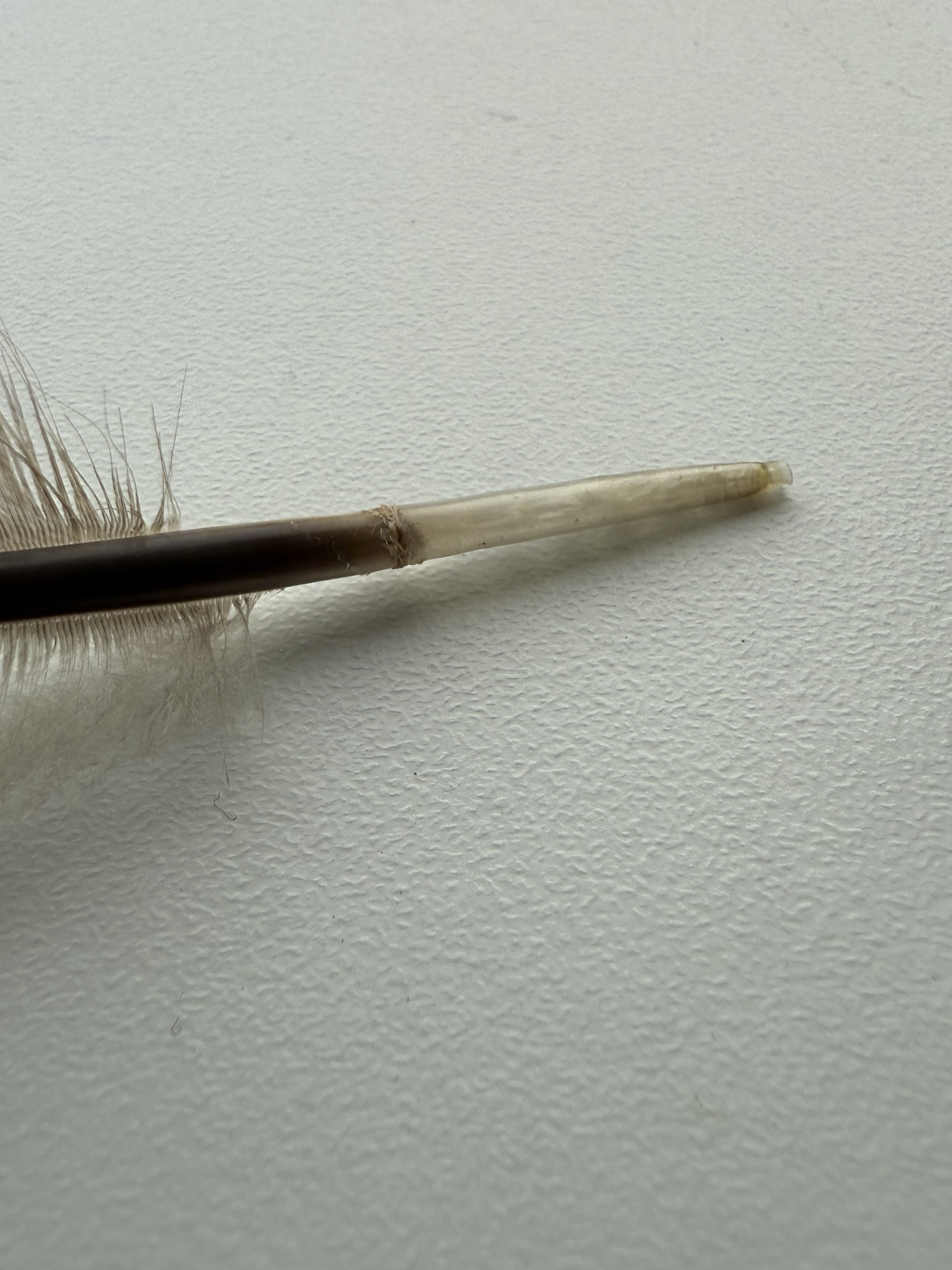
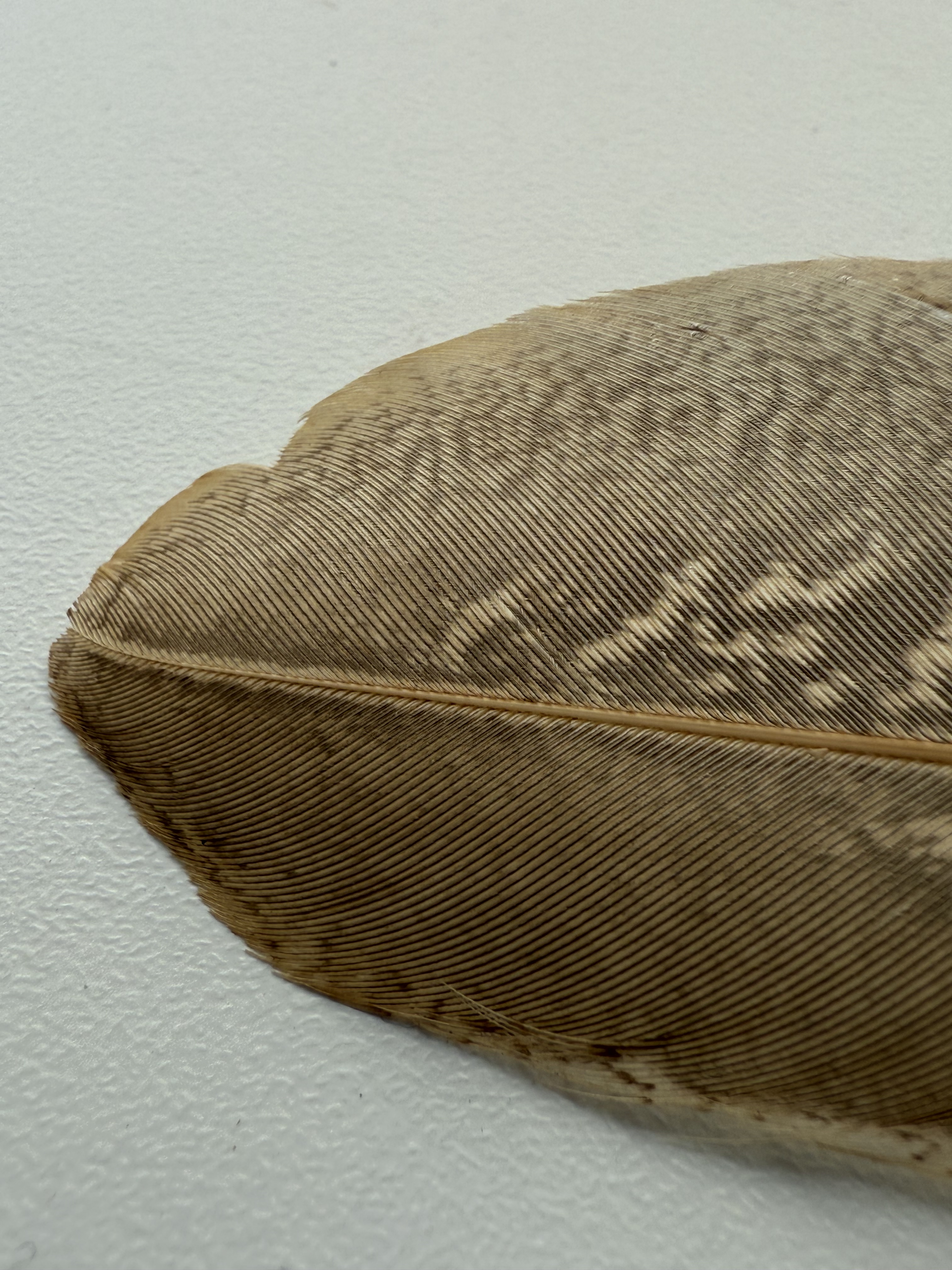
This particular feather found on a walk was a mixture of neutral colours and hues. On first sight it looked very ordinary but on closer inspection there were some very interesting markings especially the river of translucent cream that ran vertically on one side.
There are many textile artists who have taken inspiration from feathers. Here are a few examples of artists who have worked with the concept of feathers.
JanainaMilheiro
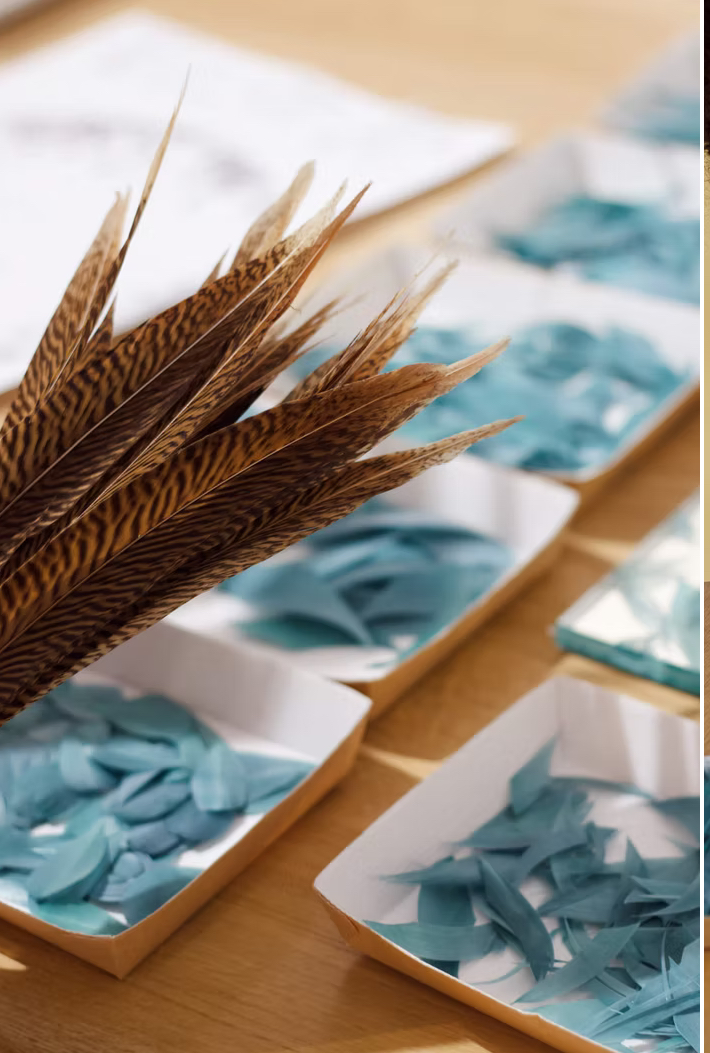
According to the webpage homofaber.com Janaïna creates textiles and sculptures from feathers. She actually creates her work using feathers.
She has developed a very personal, innovative approach
She mainly creates work for luxury goods, fashion and interior design
Janaïna Milheiro stumbled upon featherwork quite by chance. At textile design school she was encouraged to collect materials. When the moment came to start her end of year diploma work, she delved into her collection and picked out feathers, using them to create a series of small fabrics. Her journey with feathers then unfolded very organically, through experimentation. “I started to work the feathers by weaving and embroidering them,” she says. “Weaving helped me discover this material.” Following her studies, she presented these pieces at a Paris exhibition dedicated to exceptional textiles, kick-starting her career.
Deborah Kruger
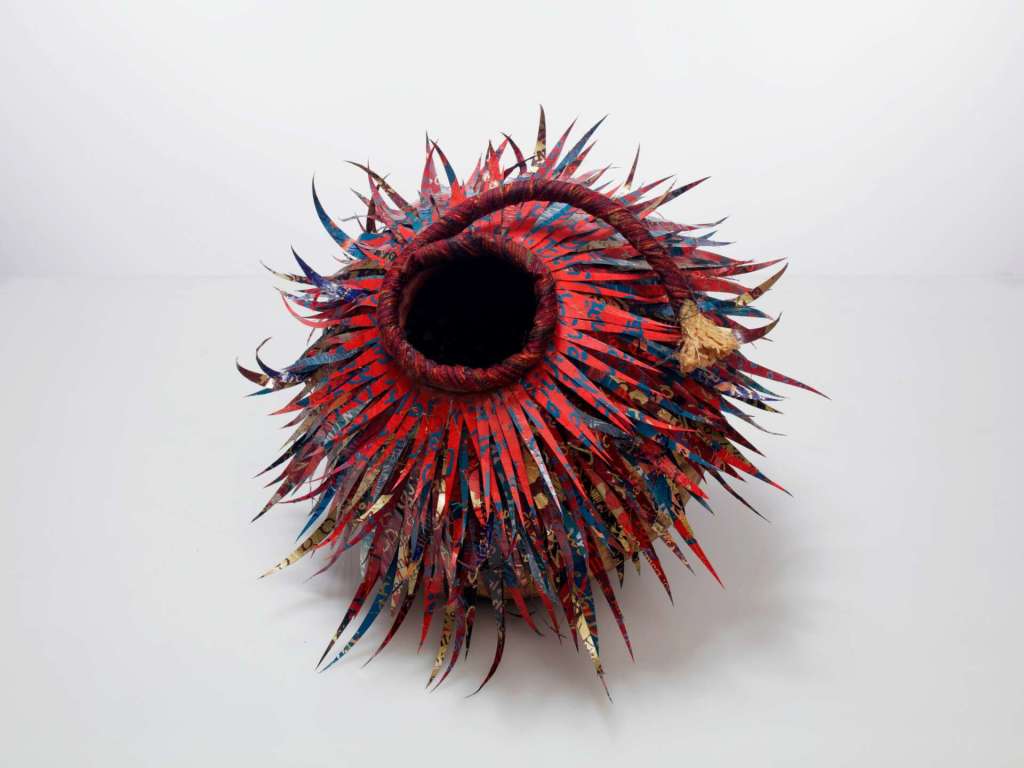
This textile artist uses feathers from endangered birds as her inspiration – not the actual feathers but feathers made from recycled plastic bags. Kruger’s work is extremely colourful and she creates pieces of all scales. I particularly like this red and blue vessel shape that she has created.
Image Credits Carlos Diaz Corona
Kate MccGwire
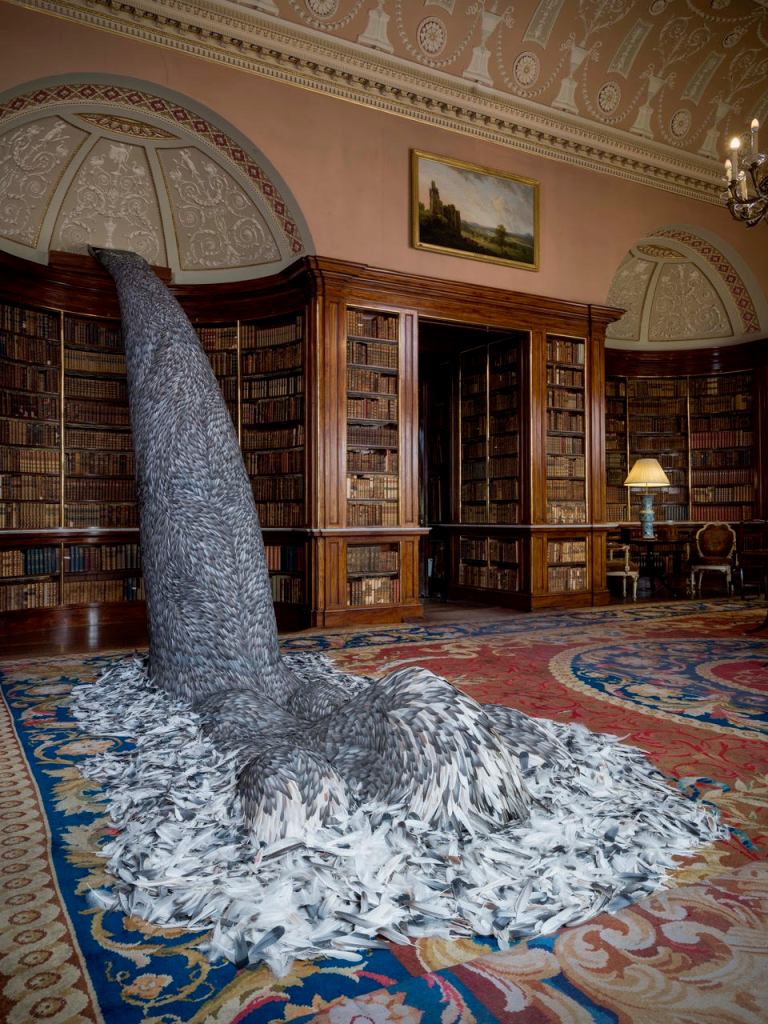
Kate MccGwire works with actual feathers to create large scale bulbous, flowing sculptures. She often uses pidgeon feathers sourced from pidgeon racers who gather up dropped feathers. Apparently Kate likes the fact that initially viewers to her work are astounded by it but then when they find out what the work is made from are repulsed by it.
”But are often perturbed and revolted when they understand what the material is,” which is exactly her intention. By juxtaposing the raw materials with the finished artwork, she asks viewers to consider the everyday beauty that’s often overlooked. Www.thisiscolossal.com
Joana Vasconcelos
Why Feathers Inspire Textile Artists
• Delicate texture & movement – softness, lightness, and motion.
• Textural contrast – airy fragility vs. structural textiles.
• Material innovation – natural feathers or reconstructed alternatives open creative pathway
When thinking about using feathers as a source of inspiration I am not thinking about using the actual feathers. It is the delicacy, softness, airy fragility, transparency which inspires me. Whilst taking the top images I was taken aback by how delicate the feather was.
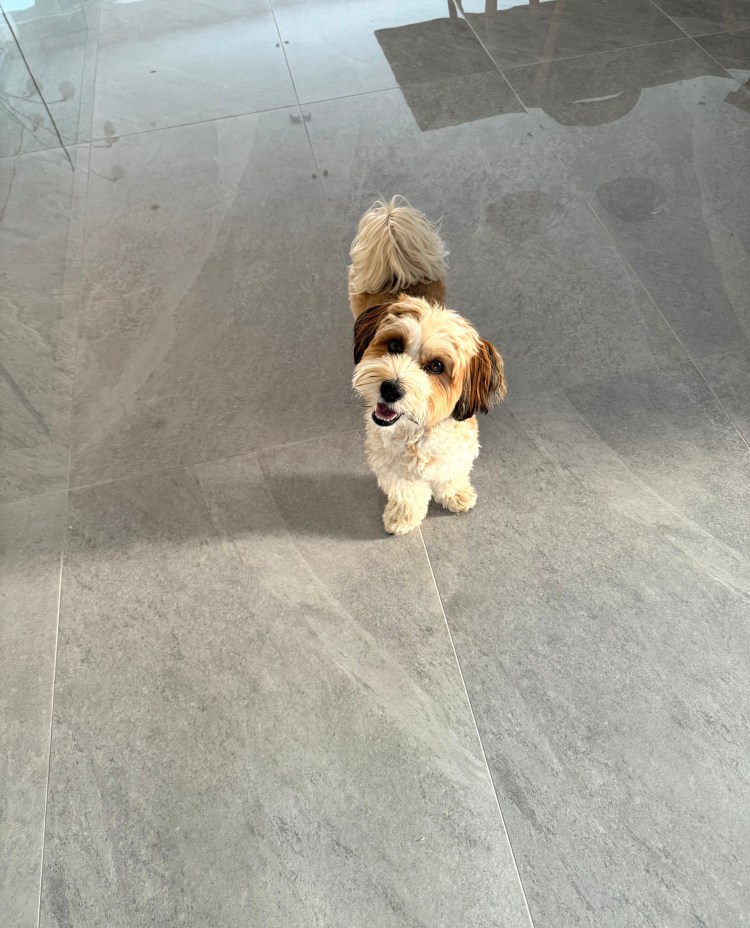
Well that was quick. Only yesterday in my first post I explained how much I had loved loom weaving but that circumstances had made me pack my loom away and now I had forgotten how to weave. As I reflected on this post I realised that I desperately wanted to get my loom out and learn to weave again. It’s only fair to say that I had been thinking this for a long time now but didn’t have the motivation or wherewithal to actually find a way of doing it. Anyway last night I started searching weaving teachers near to me. There is an adult education class virtually around the corner but this little fellow is stopping me from enrolling on that.
I think Burlington Bertie might crop up in this online diary so it’s best to introduce him early on. Bertie is two and a half now but has never been left on his own. Therefore my husband and I take it in turns to go out and do our hobbies. My husband is a skilled “veteran” tennis and padel players so tends to go out without Bertie more than I do!! Anyway I have to look after Bertie on the morning that the weaving course is running. BUT I found a brilliant young teacher who runs classes about an hour away from me and I’ve enrolled on a two day setting up the loom course. This takes place on very soon and I’ve booked a place. Just fantastic.
Www.dobbyandrose.co.uk actually run one to one sessions too so if I have a problem or need advice I can book one of these and get some help. Needless to say I’m extremely excited.
I’ve also been looking at Weaving books. (I sold ALL my craft books that I had collected over the years. There were a lot and I mean a lot of brilliant books in my collection). I just lost all motivation to make anything and wanted everything gone from my house that reminded me that I wasn’t doing crafts.
Just a quick thought on WHY I completely lost a desire to do crafts.
Yesterday I explained how my relationship with making in metal changed and also how much joy I got from making useful things when I was weaving. When my parents came down from Lancashire to live with us all the clutter associated with crafts just overwhelmed me. As I too was getting older I just felt the need to simplify my life – to make it less complicated. Since throwing out all of my incredible craft resources I have realised that without that mess, without that clutter I don’t have much joy in life. I need to be making useful things.
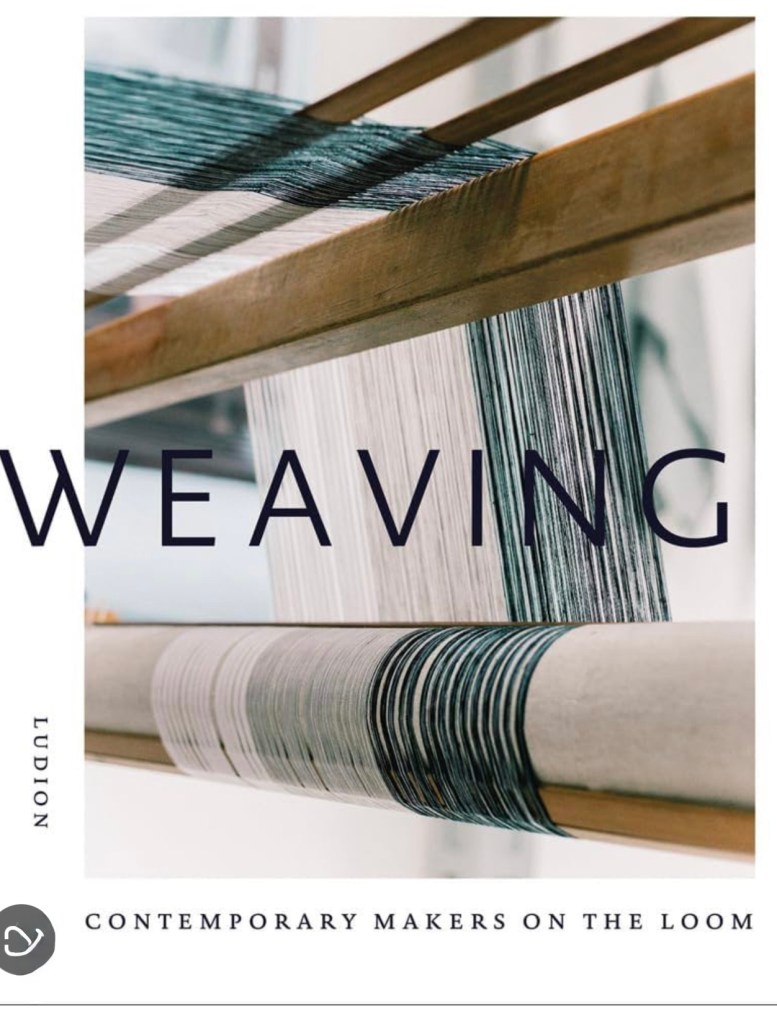
I have decided that I definitely need to buy “Weaving Contemporary Makers on the Loom” by Katie Treggiden which according to its leaf jacket “Explores the modern revival of weaving through profiles of twenty contemporary artists, examining themes of emancipation, migration and technology in textile craftsmanship.’
Weavers in the book include:-
Daniel Harris founder of the London Cloth Company. (Self taught weaver, rescues looms from old mills in UK, uses only wool from British sheep. He emphasises sustainability and traceability with all the textile production (spinning, weaving, finishing) all taking place in the UK.
Alexandra Kehayoglou a weaver from Argentina who practices according to Damn Magazine Damnmagazine.net a way of weaving she calls “silent activism”.
“Activism at its route can be described as a collective effort that is carried out to make shifts in social, political and economic reform. It is executed with purposeful energy and can take many forms, from the gathering of crowds on the streets to people communally petitioning through letter writing.
Historically activists have also used art, typography and fashion to propagate their messages in the hope of gaining support. Now contemporary activist groups make use of social media, and other technologies, in order to expand civic engagement and gain a larger global audience.
These new methods of activism have seen messages spread more rapidly across the world and have led to an escalation of events such as the “storming of the Capitol” in Washington DC, Black Lives Matter protests in cities worldwide, and rioting in response to citywide curfews imposed by governments in attempts to prevent the spread of the coronavirus. The acceleration of technology-based activism has seen both positive and negative changes occur in politics and individual awareness for the needs of local communities. It is also true that such forms of activism have become more visible, more forceful, and in some cases more susceptible to fake news and algorithmic manipulations”.
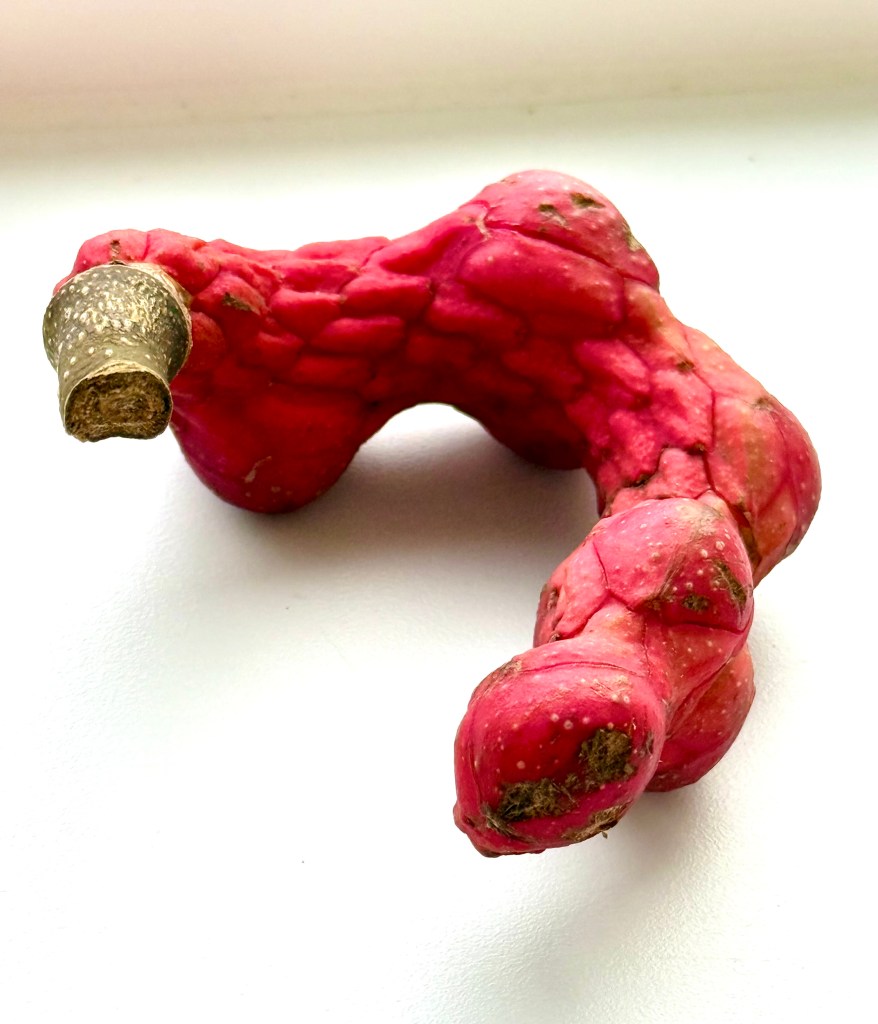
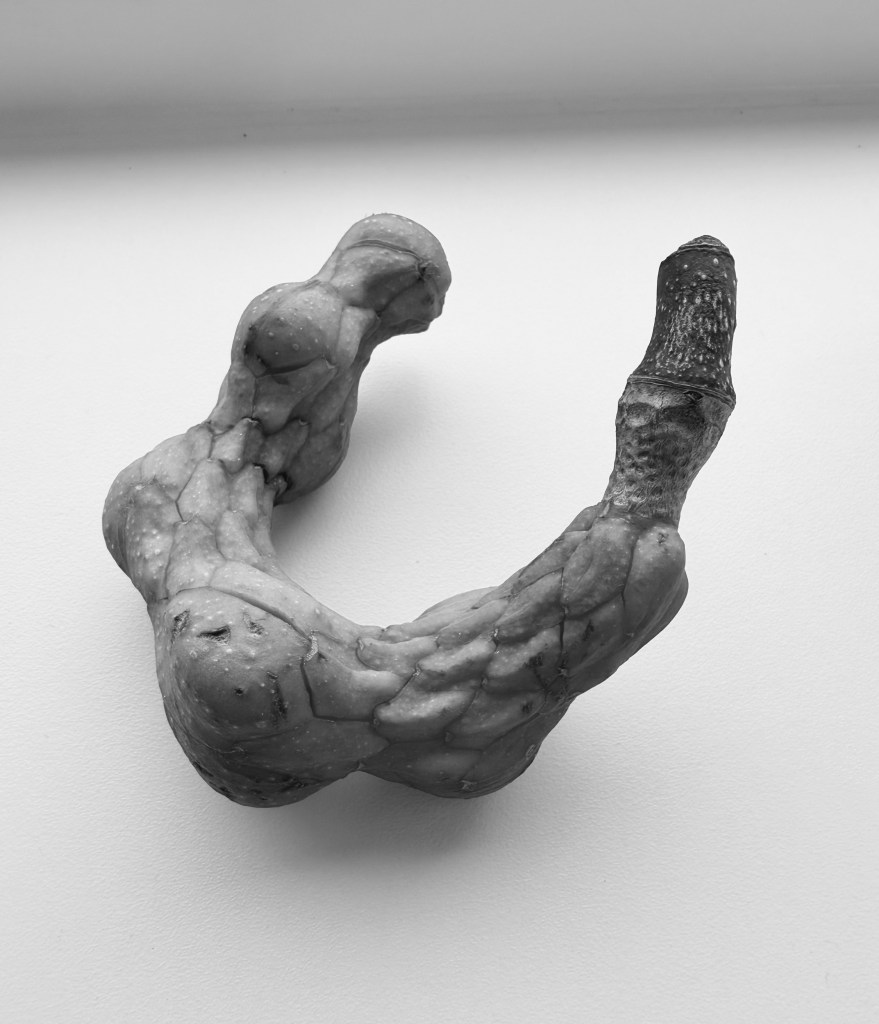
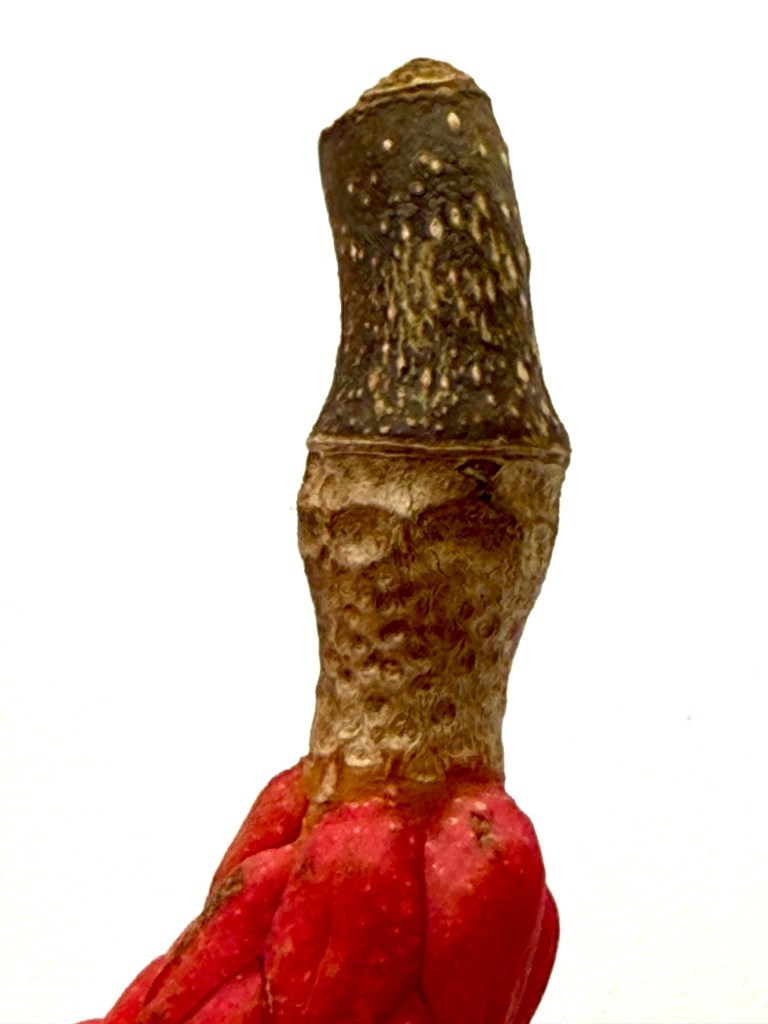
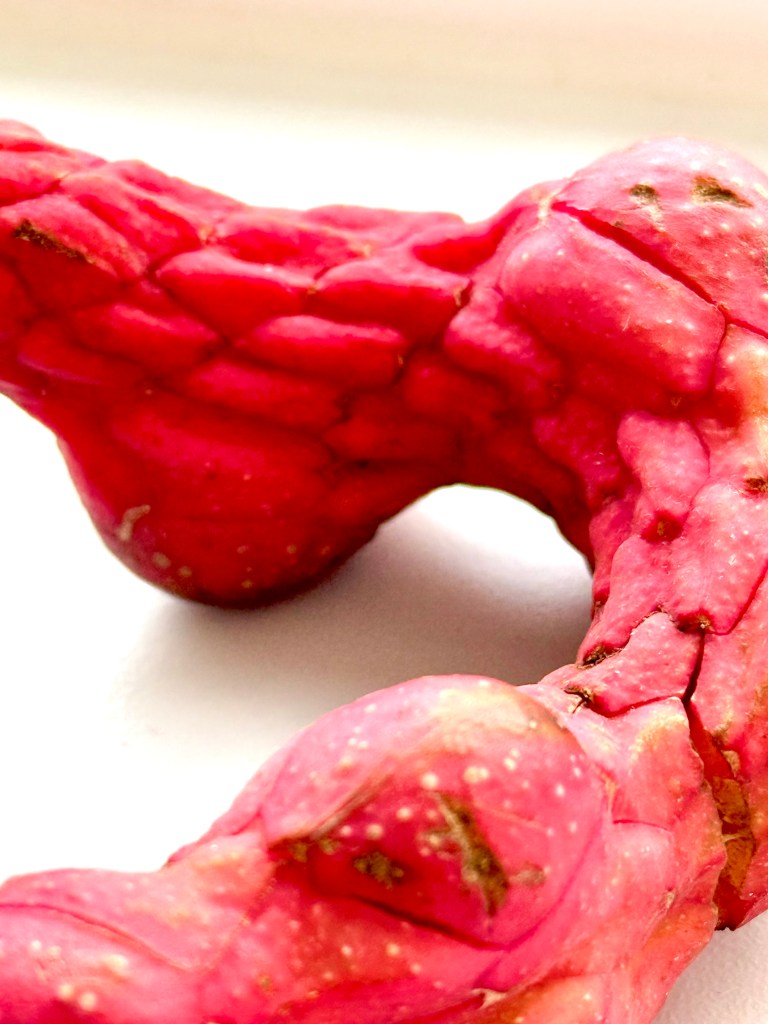
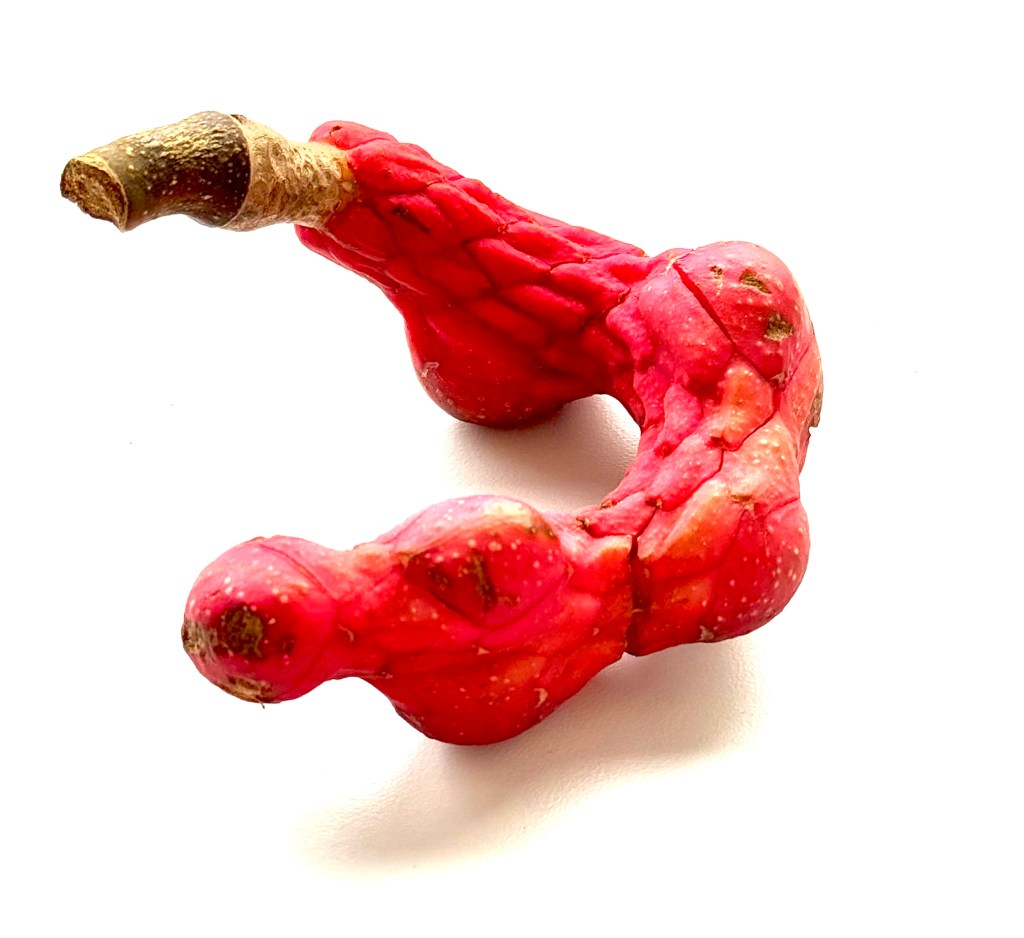
Whilst visiting Lanhydrock House in Cornwall I found this beautiful fallen seed pod on a path. I was captured by its interesting form, its undulating texture, unusual colour, and its tactile quality. At the moment I do not know what tree this seed has come from but I suspect it is from a form of magnolia. I am purely responding to the seed pod’s actual presence. There is so many inspirational aspects to this seed pod and reflecting on all of its qualities made me wonder if I would like to look at seed pods as an area of research for my work.
Seed pods are containers of promise. Of what will be. The pods represent nurturing of new life and are vessels of protection. They are also mechanically functional and have simple opening mechanisms in them. Obviously they are womb like. Most seed pods have some form of fibrous lines as part of their structure either for strength and structure or as part of the mechanical device for opening the pods and spreading seeds.
Valves, hinges, part of pods
Lines lend themselves to weaving. Lines show structure of the seed pods form, a strengthening fibre that shapes the seed pods and best aids seed distribution. The fibrous lines are the strength the fibres between the lines are like a cover, a tent canvas going over a frame.
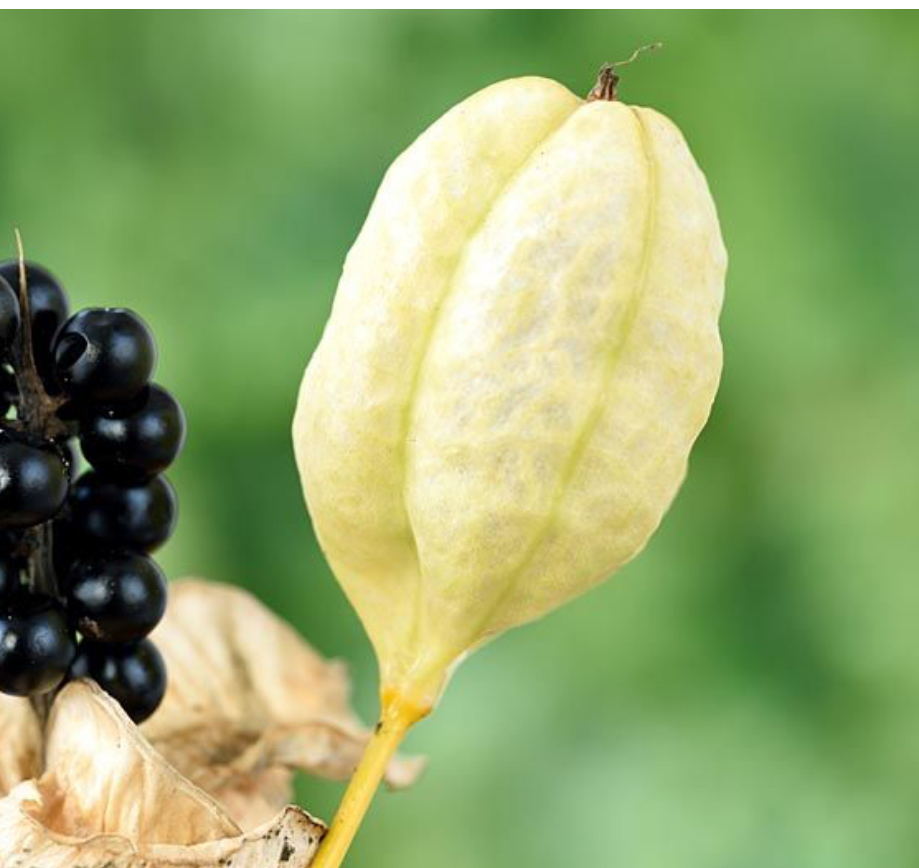
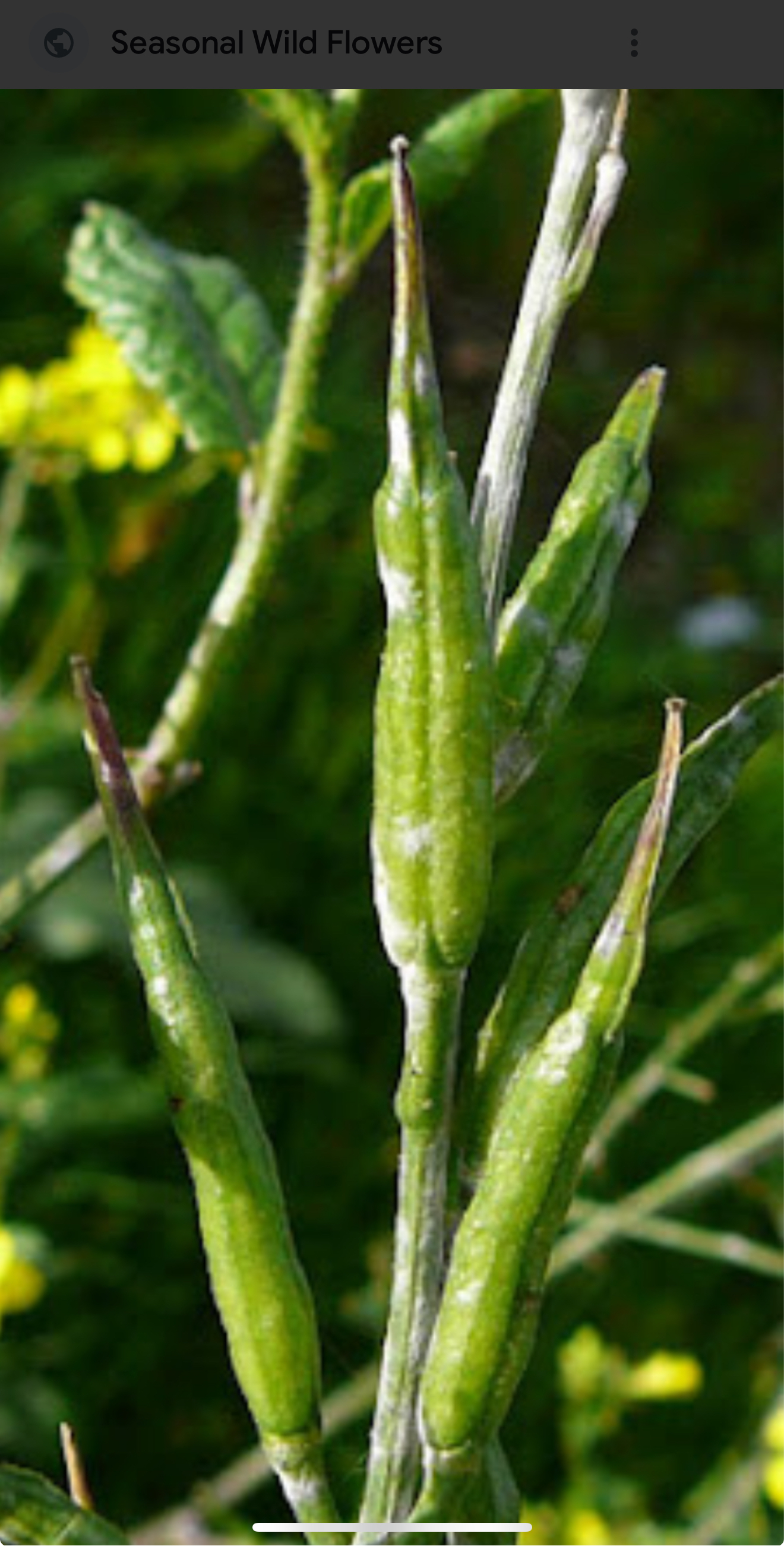
Here are some other seed pods with lines creating shape. Cages hiding the new life within.
Not usually one to start preparing for anything early but here I am trying to master WordPress. It’s not my first rodeo with WordPress and I do not find it intuitive but I’ll give it another go. Let’s start off the first module of the OCA Textile degree with a very positive attitude. I can do it –
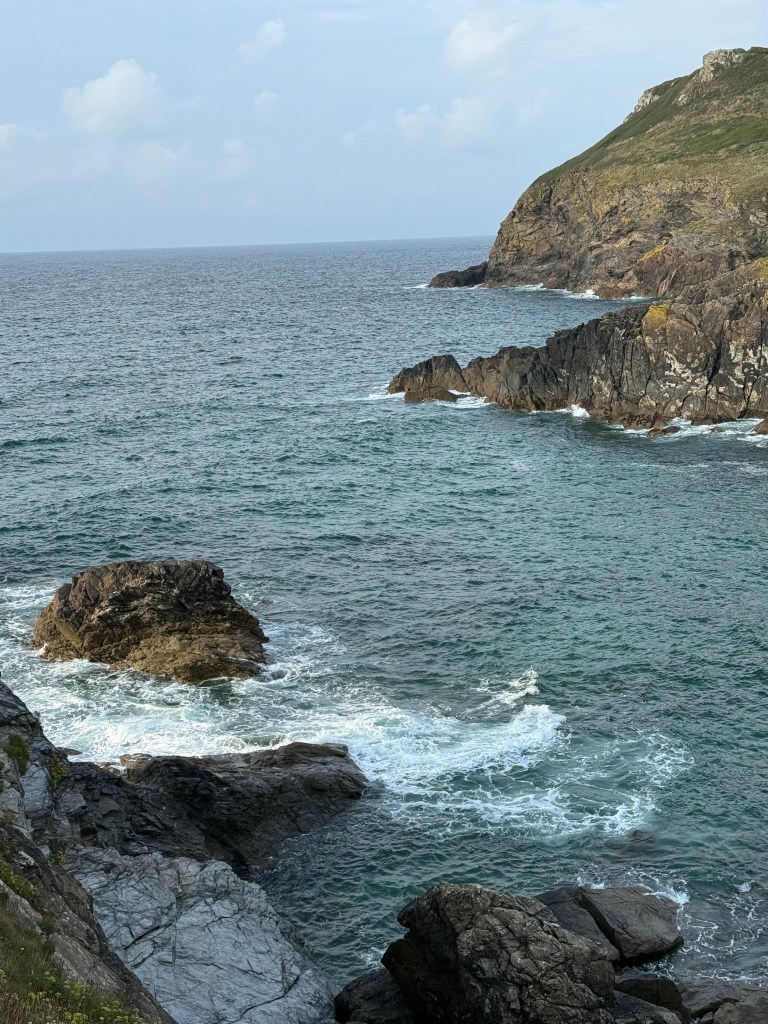
My name is Marie Godfrey and I am spending the summer at our house in Cornwall – well why not – but soon it will be time to go back to the suburbs of London. I have spent my time here walking our dog and taking in the serenity and astounding beauty of the Cornish coastline.
Being surrounded by a palette of coastal colours, blues, greens, earthy neutrals is calming to the soul. Of course the colours change dramatically depending on the time of day, the sunlight and the weather. The colours of Cornwall are not without their splashes of zingy bold colours – little boats on the sea painted in red and white, windbreaks in their merry stripes and bold jaunty swimming costumes of the people brave enough to venture into the cold waters. Sometimes the seascape becomes shimmering liquid silver when a watery sunlight is shining through grey clouds onto the sea and sometimes the water is a deep turquoise The myriad of different colours and hues are of course inspirational. Many contemporary artists find inspiration for their beautiful work from our coastline as have generations of artists throughout time. This genuinely concerns me. I seriously wonder how it is possible to make unique work when so many talented crafts people have already used coastal features, seaside artefacts, coastal colour pallets in their work.
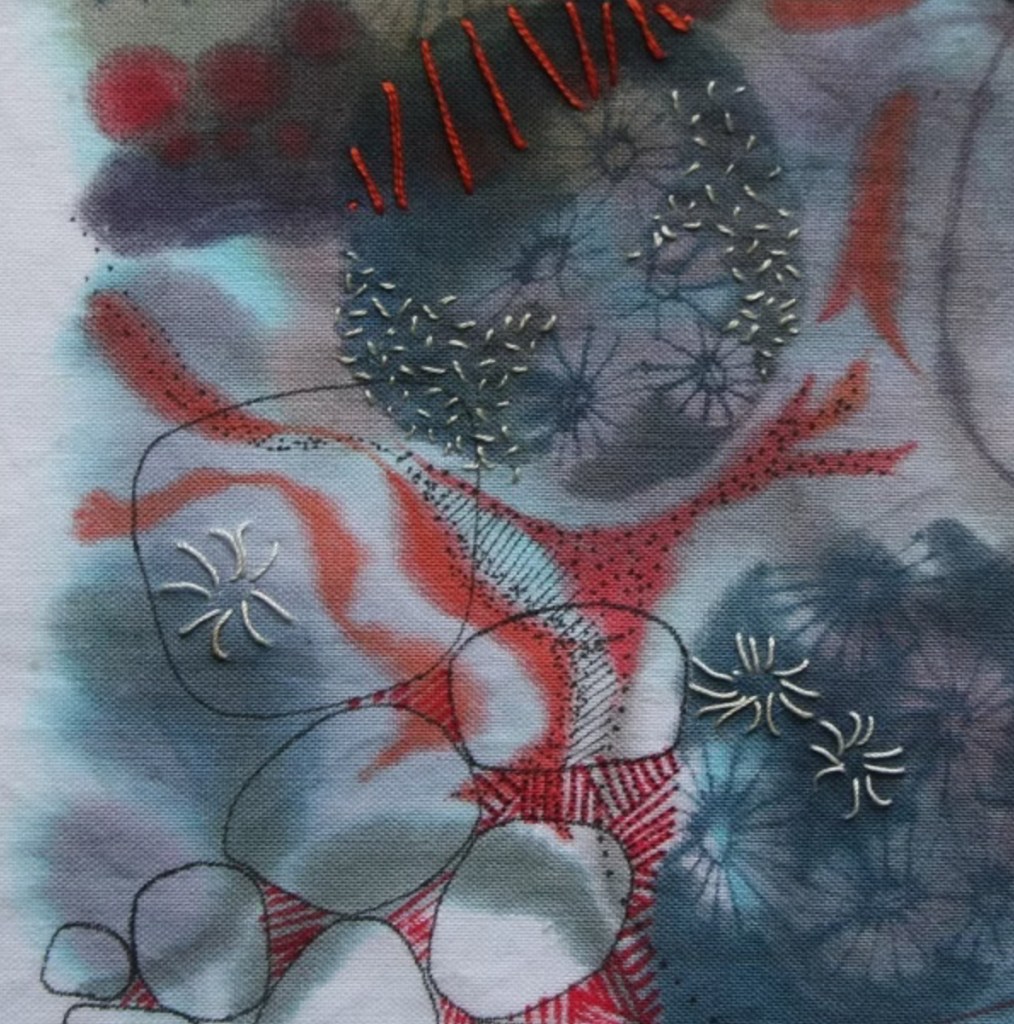
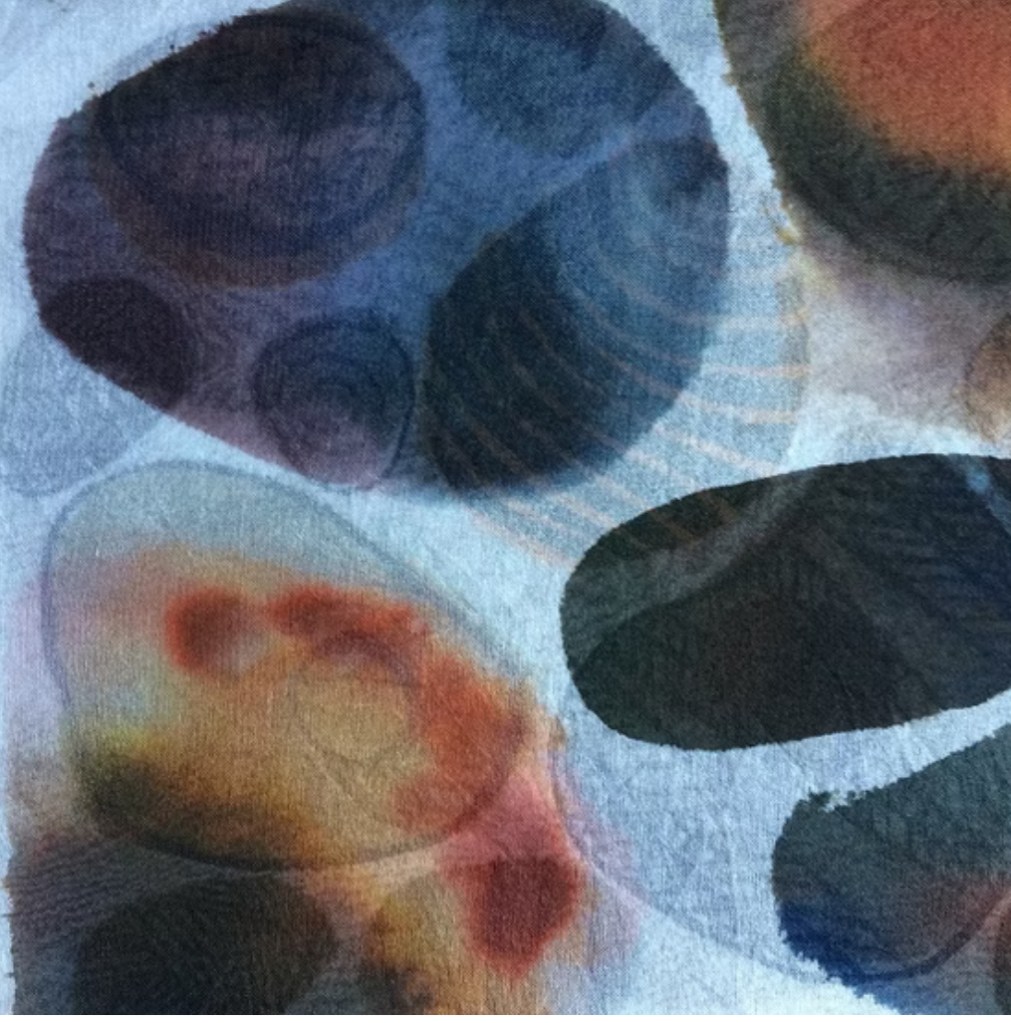
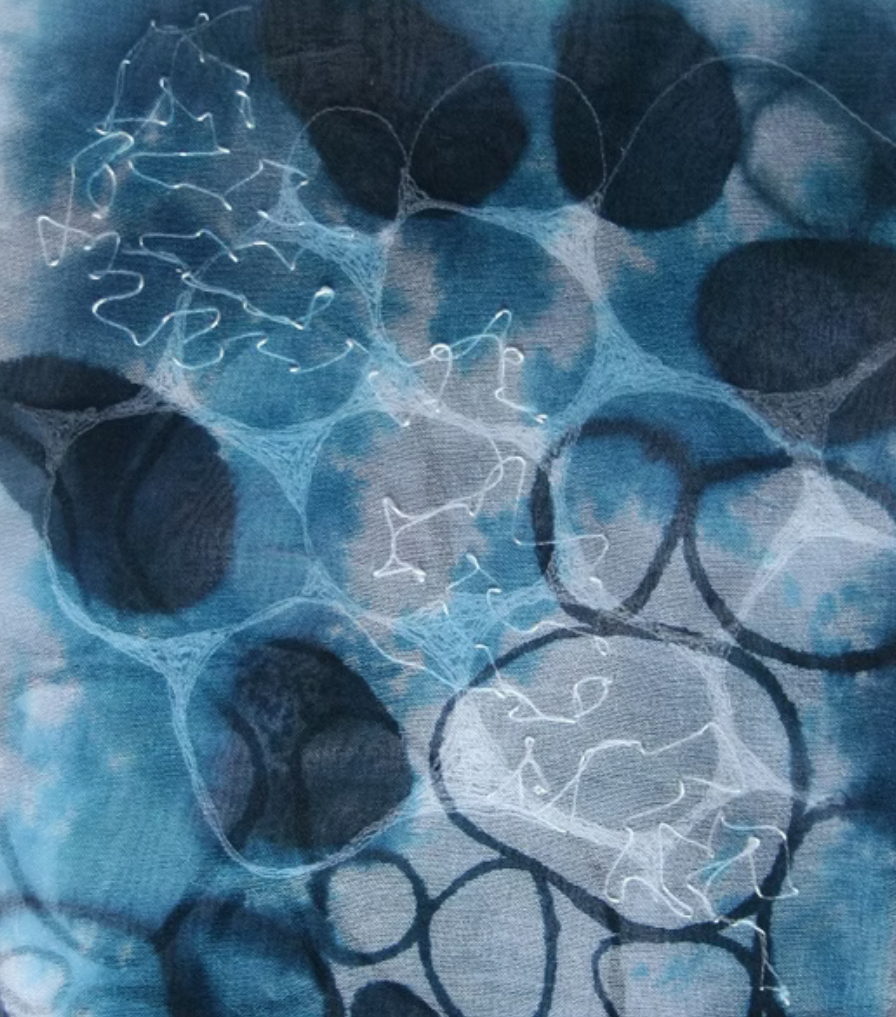
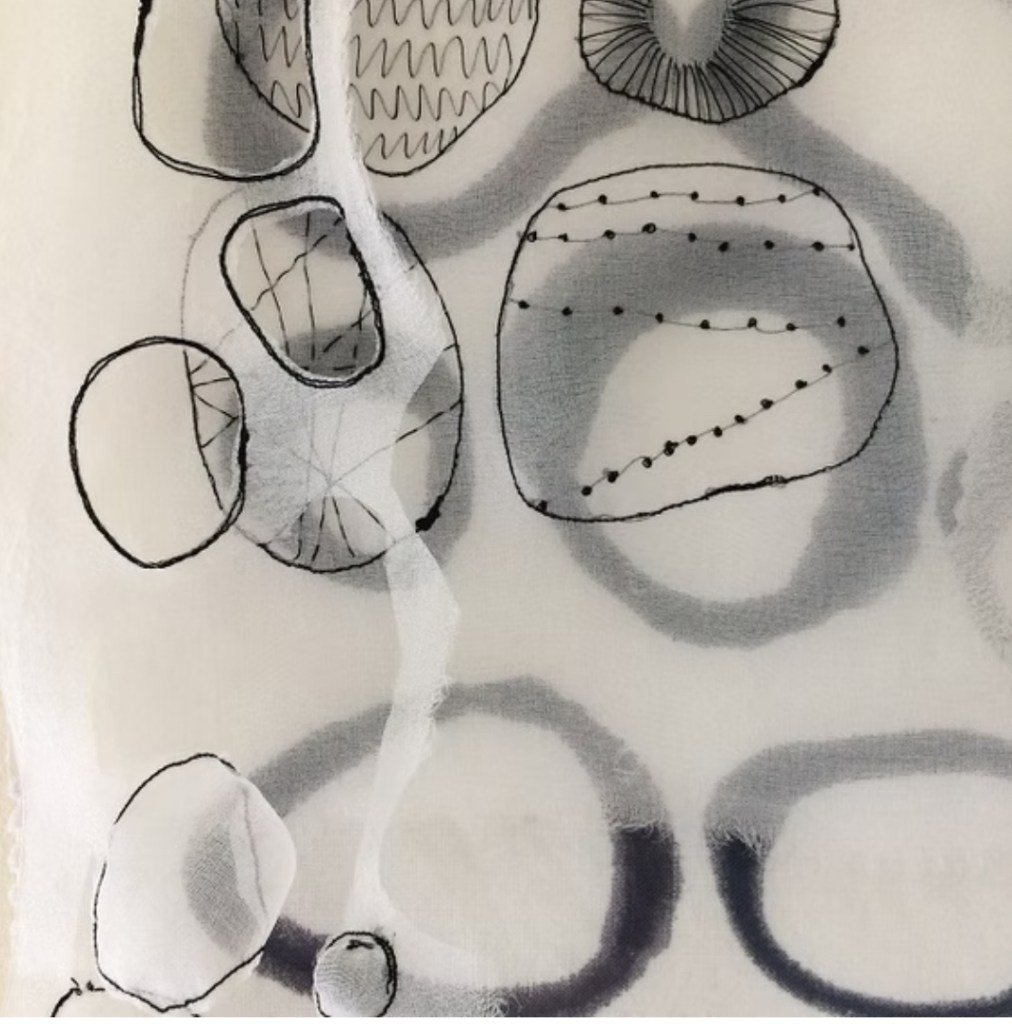
Louise Day is a visual artist living and working in Argyll on the West coast of Scotland. According to her website http://www.louiseday.co.uk Louise uses “drawing, textile and watercolour to create works inspired by the natural forms of my beautiful local environment.”
The above images are textiles created by Louise Day using the Sea as inspiration. She doesn’t give the textiles names or not that I can see anyway. The colours that she uses are beautiful – water like and painterly. The textiles appear to be prints some with surface embroidery. Sadly I haven’t see these textiles in person so am just making assumptions based on the images that Louise has shown on her website.
Why is my first chosen artist in my online diary Louise Day?
It’s definitely something to do with the depth of colour she has used and the small details of neutrals or whites that serve as a contrast to lift the deeper colours and also to highlight them.











 MARIE GODFREY ONLINE DIARY